|
|
Original Article
| ||||||
| Gemcitabine and cisplatin in inoperable, loco-regionally advanced and metastatic gallbladder cancer: A study from Northern India cancer institute | ||||||
| Vineet Talwar1, Shubhra Raina2, Varun Goel3, Dinesh C. Doval4 | ||||||
|
1MD, DM, Senior Consultant & Unit Head, Department of Medical Oncology, Rajiv Gandhi Cancer Institute and Research Centre, New Delhi (India).
2MBBS, Medical Officer, Rajiv Gandhi Cancer Institute and Research Centre, New Delhi (India). 3MD, DNB, Consultant Medical Oncologist, Rajiv Gandhi Cancer Institute and Research Centre, New Delhi (India). 4MD, Senior Consultant & Unit Head, Department of Medical Oncology, Rajiv Gandhi Cancer Institute and Research Centre, New Delhi (India). | ||||||
| ||||||
|
[HTML Abstract]
[PDF Full Text]
[Print This Article]
[Similar article in Pumed] [Similar article in Google Scholar] |
| How to cite this article |
| Talwar V, Raina S, Goel V, Doval DC. Gemcitabine and cisplatin in inoperable, loco-regionally advanced and metastatic gallbladder cancer: A study from Northern India cancer institute. Int J Hepatobiliary Pancreat Dis 2016;6:108–113. |
|
Abstract
|
|
Aims:
The primary objective of this study was to determine the response rates of the gemcitabine and cisplatin combination chemotherapy in treatment naive patients with inoperable gall bladder cancer. The secondary objectives were to evaluate the toxicity, progression free survival (PFS), and overall survival.
Materials and Methods: Treatment naive patients with histologically proven inoperable gallbladder cancer treated with gemcitabine and cisplatin chemotherapy between March 2010 and December 2014 were included in this retrospective study. The dose of gemcitabine and cisplatin was 1 g/m2 on day 1 and 8, and 75 mg/m2 on day 1, in a 21-day cycle respectively. Computed tomography scan was used for response assessment. Results: There were 32 men and 59 women with a median age of 52 years (range 30–67 years). Of the 91 patients, 9 (9.9%) patients achieved a complete response and 41 (45.1%) patients achieved a partial response for an overall response rate of 55%. The median number of chemotherapy cycles administered were 6 (range 1–9). The median progression free survival (PFS) was 5.4 months [95% confidence interval (CI) 3.9–7.9 months], with one year survival rate of 34.1%. Common toxicity criteria grade 3 or 4 anemia was seen in 4 (4.4%) and 2 (2.2%) patients respectively. Grade 3 neutropenia and thrombocytopenia was observed in 10 (10.9%) and 9 (9.9%) patients respectively. Conclusion: The combination of gemcitabine and cisplatin is active in advanced gallbladder carcinoma with mild toxicity. | |
|
Keywords:
Chemotherapy, Gallbladder cancer, Gemcitabine + Cisplatin
| |
|
Introduction
| ||||||
|
Gallbladder cancer is the most common malignant tumor of the biliary tract and sixth most common gastrointestinal cancer worldwide [1]. Although, gallbladder cancer is one of the rare cancers in many parts of the world, it is more prevalent in several regions of East Asia and Latin America. A very high incidence of gallbladder cancer has been reported from Chile (27 per 100,000), Delhi, India (21.5 per 100,000), La Paz, Bolivia (15.5 per 100,000), Poland (14 per 100,000), South Karachi, Pakistan (13.8 per 100,000), Quito, Ecuador (12.9 per 100,000), Japan (7 per 100,000) and Israel (5 per 100,000) [2][3]. In contrast, to above regions of high prevalence, the annual incidence rate of gallbladder cancer worldwide is just 2.2 per 100,000 population [1]. In India, gallbladder cancer is more prevalent in northern and northeastern regions with a 10 times higher incidence as compared to southern regions [4] [5]. Gallbladder cancer is two times more common in females than in males in India as compared to 3:1 ratio in the western world [2][3] [5][6]. The peak age-specific incidence rate is generally seen in the seventh and eight decade in either sex. Due to the lack of early signs and symptoms, majority of patients with gallbladder cancer have advance unresectable disease at the time of presentation. The clinical presentation is non-specific with over two-thirds of patients being diagnosed either during surgery or postoperatively [7] [8][9]. The presenting symptoms often include abdominal pain, weight loss, fever and jaundice. Adenocarcinoma is the most common histological presentation of gallbladder cancer followed by squamous and undifferentiated carcinomas. Patients of advanced gallbladder cancer have a very dismal prognosis with overall survival of less than one year and five-year survival of less than 5% [10][11]. Although early surgical resection remains the best approach for improving the overall long term survival of gallbladder cancer patients, clinicians have to depend on palliative chemotherapy for achieving the desired results in majority of the patients presenting with unresectable disease [12]. Systemic chemotherapy with agents like 5-FU/leucovorin; gemcitabine; gemcitabine/cisplatin; gemcitabine/oxaliplatin; gemcitabine/carboplatin and capecitabine has shown good response rate and survival benefit in the management of advance gallbladder cancer . Gemcitabine (difluorodeoxycytidine), an analog of cytosine arabinoside is a pyrimidine antimetabolite that has the potential to be synergistic with cisplatin by virtue of its mechanism of action [13]. An impressive response rate of 36–48% and median overall survival of 4.7–7 months has been reported with gemcitabine and cisplatin combination chemotherapy in advanced gallbladder cancer in the three phase-II studies [14] [15] [16] . The results of ABC-02 study from the UK and BT22 study from Japan has confirmed this fact in randomized controlled trial setting and established gemcitabine and cisplatin as a standard of care in the management of advance unresectable gallbladder cancer [17] [18]. We undertook a retrospective study of gemcitabine and cisplatin combination chemotherapy in treatment naive patients with inoperable gallbladder cancer. The primary objective of this study was to determine the response rates of the gemcitabine and cisplatin combination chemotherapy and the secondary objectives were to evaluate the toxicity, PFS and overall survival. | ||||||
|
Materials and Methods
| ||||||
|
Study population Treatment Efficacy and safety assessment Statistical Analysis | ||||||
|
Results | ||||||
|
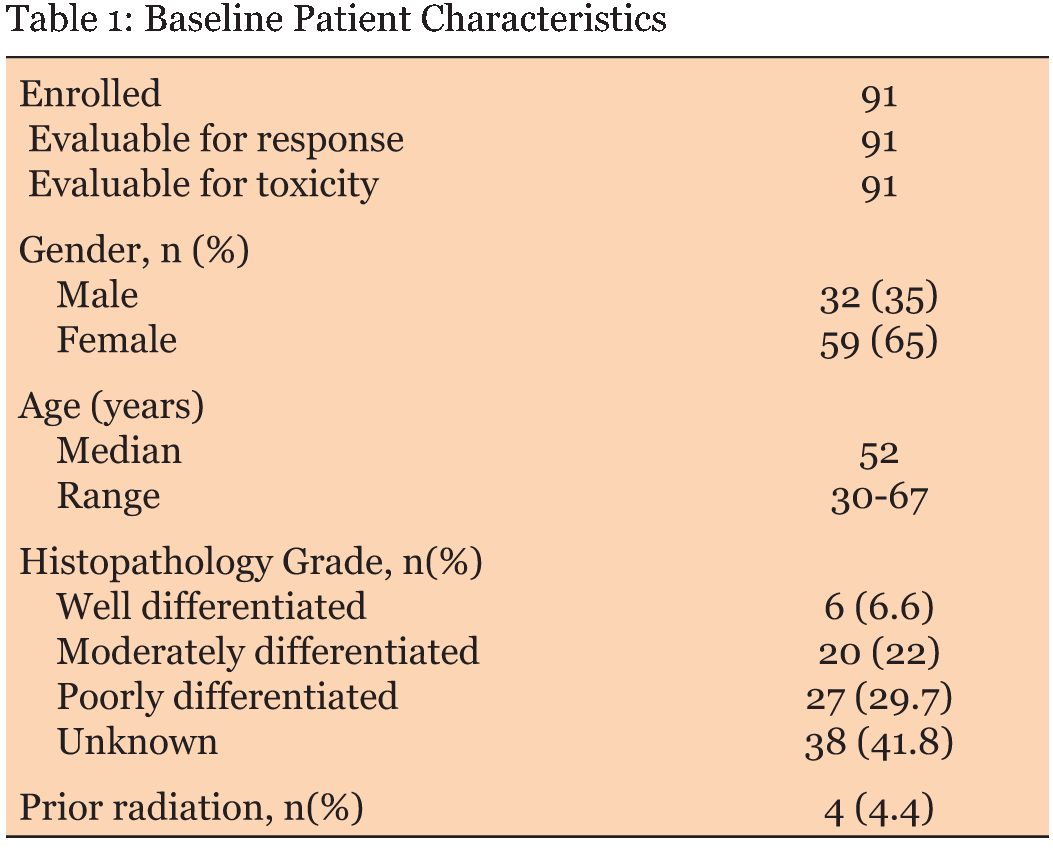
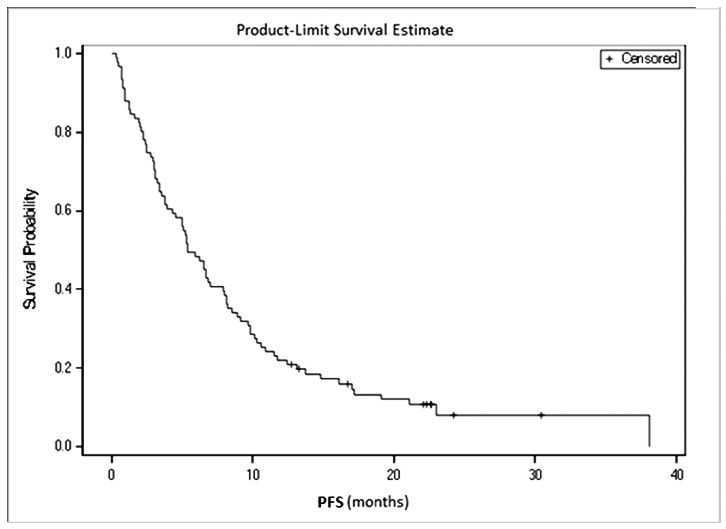
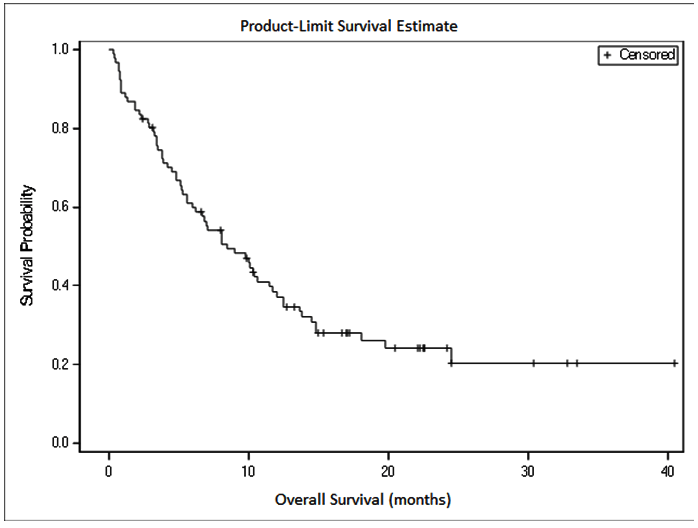
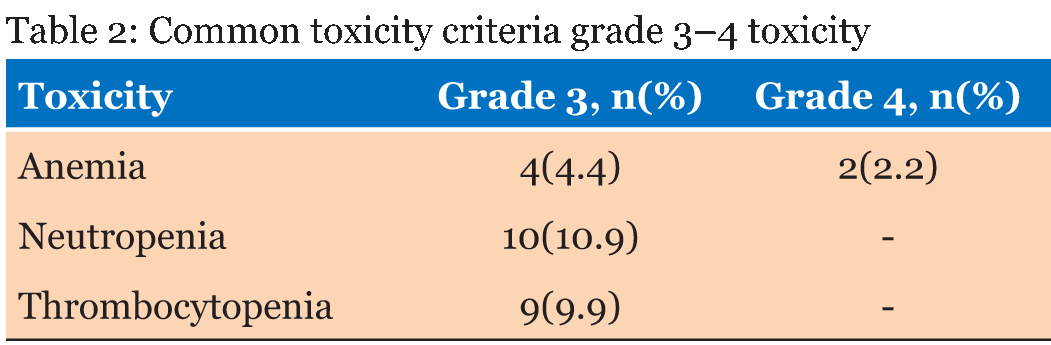
A total of 91 patients were included in this study between March 2010 and December 2014. There were 32 men and 59 women with a median age of 52 years (range 30–67 years). Main baseline patient characteristics are enumerated in Table 1. Twenty-two (24.2%) patients had locally advance disease whereas 69 (75.8%) patients had metastatic disease at the time of inclusion in the study. Of the 91 patients, 9 (9.9%) patients achieved a complete response and 41 (45.1%) patients achieved a partial response for an overall response rate of 55%. Ten (11%) patients became lost to follow-up whereas 26 (28.6%) patients were alive at the time of last follow-up. The median number of chemotherapy cycles administered were 6 (range 1–9). The median PFS was 5.4 months [95% confidence interval (CI) 3.9–7.9 months; Figure 1). The median overall survival was 8.5 months [95% confidence interval (CI) 6–11.5 months; Figure 2) with 1 and 2 year survival rate of 34.1% and 7.7% respectively. Common toxicity criteria grade 3 or 4 anemia was seen in 4 (4.4%) and 2 (2.2%) patients respectively. Grade 3 neutropenia and thrombocytopenia was observed in 10 (10.9%) and 9 (9.9%) patients respectively (Table 2). Grade 1 and grade 2 fatigue were observed in 19 (20.8%) and 36 (39.5%) patients respectively. Fifteen (16.5%) patients experienced nausea and 20 (21.9%) patients experienced grade 2 vomiting. None of the patients experienced grade 3 or 4 nausea and vomiting. | ||||||
| ||||||
| ||||||
| ||||||
|
| ||||||
| ||||||
|
Discussion
| ||||||
|
Gemcitabine in combination with different platinum compounds have shown an impressive response rates in gallbladder cancer. Various phase 2 studies evaluating the efficacy of gemcitabine and cisplatin combination chemotherapy in patients with advanced gallbladder cancer and biliary tract cancer reports the response rate and median overall survival in the range of 21–35% and 8.4–11 months respectively [19] [20][21][22]. Studies evaluating the efficacy of gemcitabine and oxaliplatin combination chemotherapy in patients with advanced gallbladder cancer and biliary tract cancer reports response rate were ranging between 22–50% and median overall survival ranging between 7.6–14 months [23] [24] [25]. To date, there is only one phase 3 trial from India that compared the combination of gemcitabine plus oxaliplatin (GemOx) to flurouracil plus folinic acid (FUFA) and to best supportive care. The study showed significantly longer (9.5 months) overall survival in GemOx group as compared to best supportive care (4.5 months) group. The response rate in GemOx group was 30.8% as compared to 0 and 14.3% in the best supportive care and FUFA group [26]. Studies evaluating the efficacy of gemcitabine and capecitabine combination chemotherapy in patients with advanced gallbladder cancer and biliary tract cancer reports a response rate of 17–32% and median overall survival of 12.7–14 months [27] [28] [29] [30]. With a response rate of 55% and median PFS of 5.4 months, our study confirms the advantage of gemcitabine and cisplatin combination chemotherapy in advanced gallbladder cancer . The response rate in our study is comparatively higher than the one reported in the previous studies. In the phase 3, ABC-02 trial from UK that enrolled 410 patients with locally advanced or metastatic gallbladder cancer, cholangiocarcinoma or ampullary carcinoma, gallbladder cancer subset had 149 patients with 76 patients on gemcitabine arm and 73 patients on gemcitabine plus cisplatin arm [17]. The study reports a response ra te of 37.7% in gemcitabine plus cisplatin arm as compared to 21.4% in the gemcitabine arm of the gallbladder subset. The addition of cisplatin to gemcitabine significantly improved overall survival (11.7 versus 8.1 months; p < 0.001) as well as median progression-free survival (8 versus 5 months; p < 0.001) establishing this combination as the standard of care for advance inoperable gallbladder cancer. Another similar study from Japan BT22 investigated the same treatment regimens as those of ABC-02 trial on 83 patients with 42 patients on gemcitabine arm and 41 patients on gemcitabine plus cisplatin arm [18]. The study reports a response rate of 19.5% in gemcitabine plus cisplatin arm as compared to 11.9% in the gemcitabine arm. The median survival time (11.2 months versus 7.7 months) and median progression free survival (5.8 months versus 3.7 months) were better in gemcitabine plus cisplatin arm though the same was not statistically significant. Having a total of 91 patients, our study had more number of patients on gemcitabine plus cisplatin combination chemotherapy as compared to the gemcitabine plus cisplatin arm of ABC-02 (73 patients) and BT22 (41 patients) trials. The response rate of 55% achieved in our study is way higher than the one reported in ABC-02 (37.7%) and BT22 (19.5%) trials with the only limitation of being a retrospective study. Besides, nine patients (9.9%) in our study achieved a complete remission which none of the patients in the above two trials could achieve. The 75 mg/m2 dose of cisplatin used in our study as compared to 25 mg/m2 on day-1 and 8 in the ABC-02 and BT22 trials may account for the relatively higher response rates. The excellent response rate achieved in our study could be of great relevance to high endemic countries of gallbladder cancer especially where majority of patients present with advanced inoperable disease at baseline but only prospective data collection would be able to verify this. If the prospective studies are able to confirm the high response rate as well as the complete responses achieved in our study, a new dose regimen could be established for achieving higher response rates in the treatment of gallbladder cancer. The median PFS of 5.4 months in our study is comparable to 5.8 months reported in BT22 trial but is lower to the 8 months reported in ABC-02 trial with the only limitation of being a retrospective study. A systemic review on gemcitabine plus cisplatin for advanced biliary tract cancer by Park et al. reviewed 20 studies (1 meta-analysis, 4 randomized controlled trials, 12 nonrandomized prospective studies and 3 retrospective studies) reporting the safety and efficacy of gemcitabine and cisplatin in biliary tract carcinomas. The median overall survival in these studies ranged from 4.6 months to 11.7 months and overall response rate ranged from 17.1–36.6% [31]. The median overall survival of 8.5 months reported in our study is lower to 11.7 and 11.2 months reported in ABC-02 and BT22 trials but conforms to the overall survival reported in literature. The gemcitabine plus cisplatin arm of ABC-02 trial reported grade 3 or 4 toxicities in 70.7% patients with decreased neutrophil counts, abnormal liver function, fatigue and infection being the most frequently reported adverse events. The most common grade 3 or 4 toxicities in the gemcitabine plus cisplatin arm of BT22 trial were neutropenia (56.1%), thrombocytopenia (39%), leucopenia (29.3%) and g-glutamyltransferase (29.3%). Similarly, grade 3 or 4 toxicities observed in GemOx group of the only phase 3 trial from India were vomiting, myelosuppression, neurotoxicity and transaminitis in 7.7%, 38.5%, 11% and 15% patients respectively [26]. The 27.5% of grade 3 or 4 toxicities reported in our study is lower than the previous reports with the only limitation of being a retrospective data. | ||||||
|
Conclusion
| ||||||
|
The encouraging results of gemcitabine and cisplatin combination chemotherapy in the present study, reiterates the potential role of this combination in the management of advanced inoperable gallbladder cancer. Modest toxicity achieved in our study establishes the significant advantage of gemcitabine and cisplatin combination chemotherapy over other chemotherapeutic regimens. However, prospective data collection is required to verify the advantage of this regimen. In conclusion, our study suggests the relevance of treating patients having advanced inoperable gallbladder cancer with gemcitabine and cisplatin combination chemotherapy. | ||||||
|
References
| ||||||
| ||||||
|
[HTML Abstract]
[PDF Full Text]
|
|
Author Contributions:
Vineet Talwar – Substantial contributions to conception and design, Analysis and interpretation of data, Drafting the article, Final approval of the version to be published Shubhra Raina – Substantial contributions to conception and design, Analysis and interpretation of data, Final approval of the version to be published Varun Goel – Substantial contributions to conception and design, Analysis and interpretation of data, Final approval of the version to be published Dinesh C. Doval – Substantial contributions to conception and design, Analysis and interpretation of data, Final approval of the version to be published |
|
Guarantor of submission
The corresponding author is the guarantor of submission. |
|
Source of support
None |
|
Conflict of interest
Authors declare no conflict of interest. |
|
Copyright
© 2016 Vineet Talwar et al. This article is distributed under the terms of Creative Commons Attribution License which permits unrestricted use, distribution and reproduction in any medium provided the original author(s) and original publisher are properly credited. Please see the copyright policy on the journal website for more information. |
|
|