| Table of Contents | |
|
Original Article
| ||||||
| A modified technique of pancreaticojejunostomy for soft pancreas reduces the frequency of postoperative complications | ||||||
| Rifatbegović Zijah1, Hasanović Jasmin1, Meštrić Amra2, Ahmetašević Emir1, Tursunović Amir1, Imamović Goran2 | ||||||
|
1MD, University Clinical Centre Tuzla, Department of Surgery, Tuzla, Bosnia and Herzegovina.
2MD, University of Tuzla, School of Medicine, Tuzla, Bosnia and Herzegovina. | ||||||
| ||||||
|
[HTML Abstract]
[PDF Full Text]
[Print This Article]
[Similar article in Pumed] [Similar article in Google Scholar] |
| How to cite this article |
| Zijah R, Jasmin H, Amra M, Emir A, Amir T, Goran I. A modified technique of pancreaticojejunostomy for soft pancreas reduces the frequency of postoperative complications. Int J Hepatobiliary Pancreat Dis 2016;6:89–95. |
|
Abstract
|
|
Aims:
The most demanding anastomosis of cephalic pancreaticoduodenectomy is pancreaticojejunostomy. In order to reduce the number of complications of pancreatico- jejunostomy, we worked to improve the technique of creating the anastomosis by modification of several aspects of the already standardized technique of creating a pancreaticojejunostomy.
Materials and Methods: Observational cohort study was conducted on 50 patients who had undergone a cephalic pancreaticoduo-denectomy due to a periampullary carcinoma in the period from January 2011 to March 2016. We analyzed the effect of the presented technique on postoperative morbidity and mortality. Results: Of the 50 surgical patients, 31 (62%) were male. The mean age of the surgical patients was 58.8±10.08 years. Postoperative morbidity of 28% was lower than figures from literatures, which range from 35–43% (p > 0.05). Postoperative mortality was 6%, and in line with the figures from literature. Postoperative pancreatic fistula occurred in 6% of patients, which is also lower than 12.9% found in literature (p > 0.05). Conclusion: Postoperative morbidity in patients in whom a pancreaticojejunostomy was created with presented technique, including the incidence of a postoperative pancreatic fistula, was lower, although the difference was not statistically significant. | |
|
Keywords:
Pancreatic anastomosis, Pancreatic fistula, Pancreaticoduodenectomy, Pancreaticojejunostomy
| |
|
Introduction
| ||||||
|
The heterogeneous groups of malignant neoplasms which originate from pancreatic, biliary and duodenal tissue close to the ampulla of Vater are known as periampullary carcinomas [1]. In patients who have a localized disease, the only potentially form of cure is cephalic pancreaticoduodenectomy, classic or pylorus-preserving [2] [3][4][5]. The five-year survival of patients who have undergone resection surgery for periampullary carcinoma is only 23% [6]. Although in recent year the percentage of resection ability has increased, unfortunately no significant progress has been achieved in long-term survival [7]. The most demanding anastomosis of cephalic pancreaticoduodenectomy is a pancreaticojejunostomy. The reason for this is not only the frequency of pancreatic fistula, but also the morbidity and mortality that accompany it [8]. In literature, there are descriptions of many techniques for anastomosis of the pancreas with the gastrointestinal tract after cephalic pancreaticoduodenectomy, but the two most frequently used are the end-to-side duct-to-mucosa anastomosis and the invagination technique [9]. The creation of a pancreaticojejunostomy depends also on the consistency of the remainder of the pancreas and the width of the pancreatic duct [10]. A non-fibrous pancreatic stump with fragile parenchyma is known as a "soft" pancreas. Other risk factors for development of a pancreatic fistula are also coronary heart disease, excessive alcohol consumption, hypoproteinemia, intraoperative blood transfusion (>300 ml) and cholangitis [11]. In order to reduce the number of complications of pancreaticojejunostomy, we worked to improve the technique of creating a pancreaticojejunostomy by modification of several aspects of the already standardized technique. | ||||||
|
Materials and Methods
| ||||||
|
The study was conducted at the Department of Surgery of the University Clinical Centre Tuzla. We analyzed 50 patients who had undergone elective cephalic pancreaticoduodenectomy using the modified technique, due to a periampullary carcinoma in the period from January 2011 to March 2016. Patients who had undergone cephalic pancreaticoduodenectomy as part of multi-visceral resection due to locally advanced malignant processes of other intra-abdominal organs were excluded from the study. Preoperative elevated serum bilirubin levels were found in 13 (26%) patients. In 4 (8%) patients who had elevated preoperative serum bilirubin levels, a stent was placed by endoscope in the common bile duct, and they underwent surgery after normalization of their serum bilirubin levels. They were treated as patients without preoperative hyperbilirubinemia. In all the patients, we analyzed the development of postoperative complications such as pancreatic fistula, biliary fistula, intra-abdominal abscess, bleeding, delayed gastric emptying and surgical site infections. We defined a pancreatic fistula and diagnosed it according to the criteria of the International Study Group of Pancreatic Fistula (ISGPF), a drain output of any amount of fluid on or after third postoperative day with an amylase level that is three times greater than the upper limit of normal value in serum. Also, according to the criteria of the ISGPF, we defined three grades of postoperative pancreatic fistula (A, B and C). Pancreatic fistula without any impact on postoperative clinical course is defined as Grade A. Pancreatic fistula that requires minor therapeutic intervention is defined as Grade B. The life-threatening pancreatic fistula that requires major changes in treatment and possibly reoperation is defined as grade C [12]. We detected other complications on the basis of clinical, laboratory and radiological tests. We defined delayed gastric emptying according to the criteria of the International Study Group of Pancreatic Surgery (ISGPS) as intolerance to solid food at the end of the first post-operative week, with the prolonged need for a nasogastric tube. According to the clinical effect on the post-operative course, also according to the ISGPS criteria, we differentiated three grades (A, B and C) of delayed gastric emptying [13]. We detected a biliary fistula from the appearance of bile in the abdominal drain. We detected surgical site infection by the appearance of purulent exudate in the surgical wound. We detected intra-abdominal bleeding or an intra-abdominal abscess on the basis of the clinical presentation, hematological and biochemical parameters, and the use of radiology tests, such as abdominal ultrasonography and contrast enhanced computed tomography of the abdomen. In this study, we also analyzed the correlation of the preoperative diameter of the pancreatic duct with the occurrence of postoperative pancreatic fistula. We divided the patients into two groups according to the preoperative diameter of the pancreatic duct (< 3 mm versus > 3 mm). In 28 (56%) patients, the preoperative diameter of the pancreatic duct was ≤ 3 mm. Whilst in 22 (44%), patients the preoperative diameter of the pancreatic duct was > 3 mm. In order to determine the diameter of the pancreatic duct, we used 64 slice CT of the abdomen with the application of contrast medium, Ultravist 370, Ultravist 300 and Jopamiro. We administered antibiotics (third generation Cephalosporin) to all patients before surgery. The principles of the Helsinki declaration were applied, including patient anonymity. The surgical technique Statistical analysis | ||||||
| ||||||
|
| ||||||
| ||||||
|
Results | ||||||
|
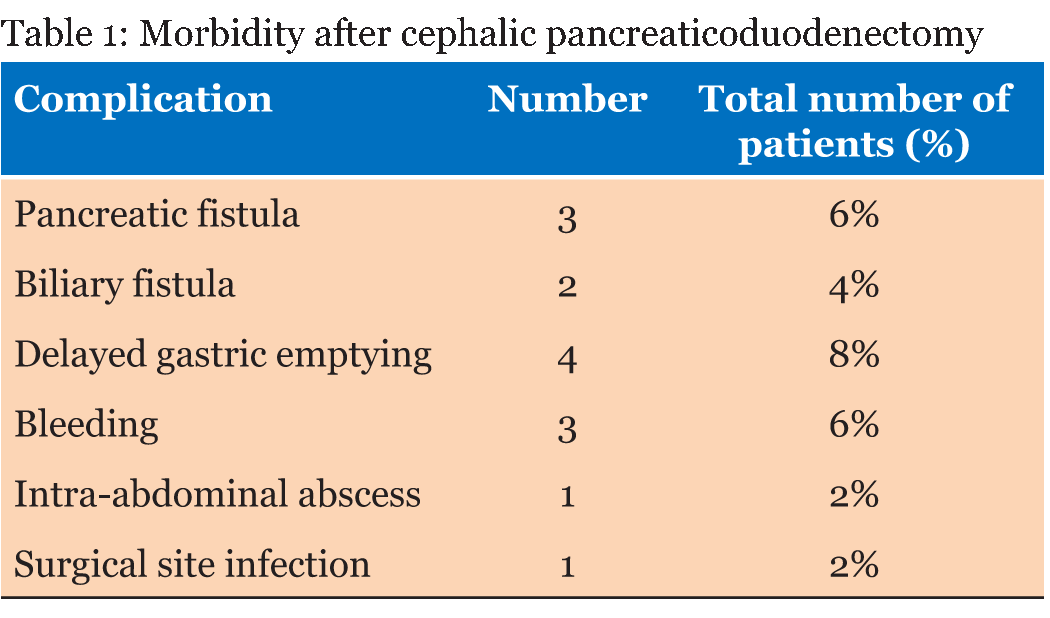
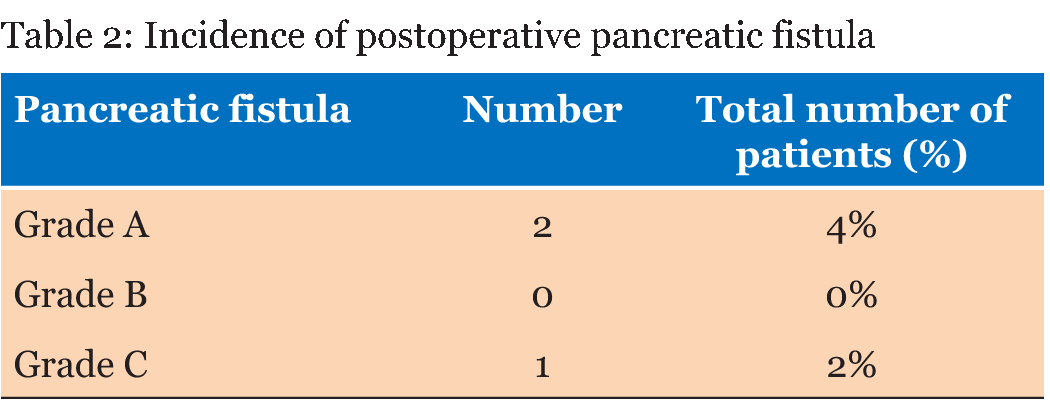
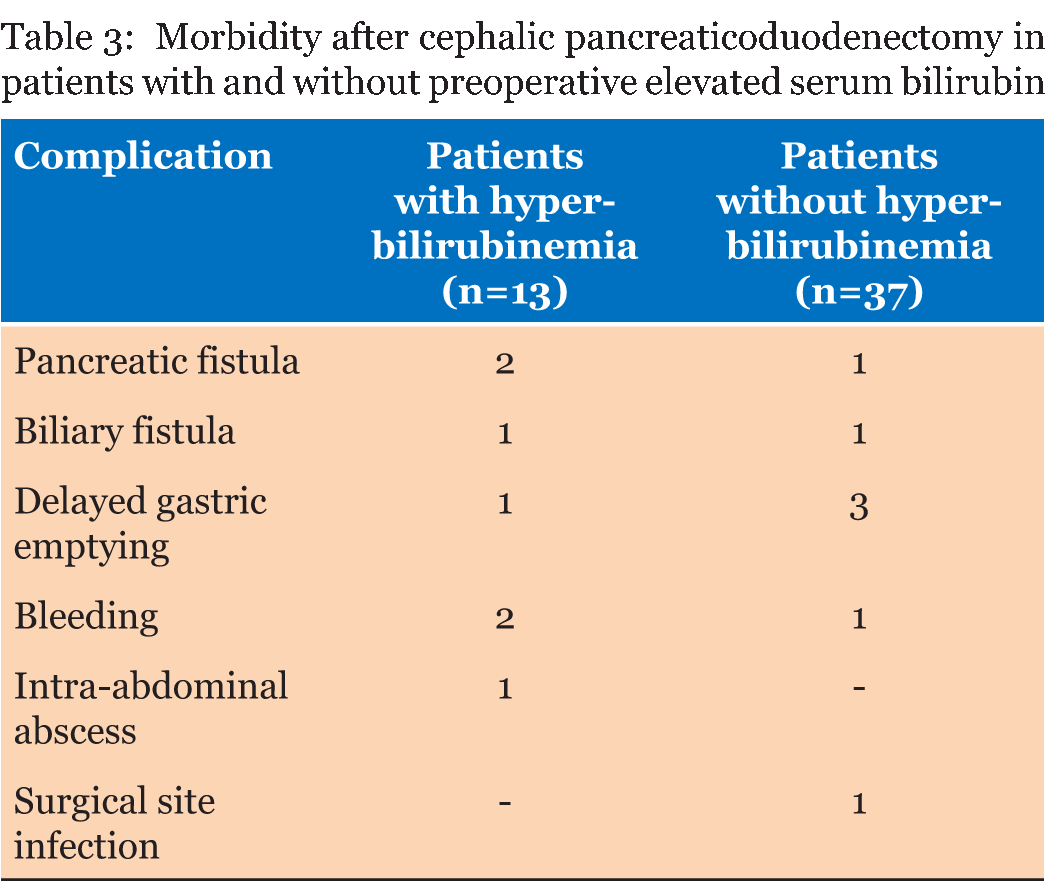
Of the total number of surgical patients, 31 (62%) were men, and 19 (38%) were women. The mean age of the patients who underwent surgery was 58.8±10.08 years, where the youngest patient was 30 years old and the oldest was 76 years old. Indications for surgery were carcinoma of the head of pancreas (23 patients), carcinoma of the ampulla of Vater (14 patients) and carcinoma of the distal common bile duct (13 patients). Of the 50 patients who underwent surgery, in 14 (28%) some of the postoperative complications occurred. The type and incidence of postoperative complications are given in Table 1. Postoperative pancreatic fistula occurred in 3 (6%) patients. In two patients, a grade A pancreatic fistula was diagnosed whilst in one patient a grade C pancreatic fistula was diagnosed which required surgical re-intervention (Table 2). The value of drain amylase in patients who developed grade A pancreatic fistula measured on postoperative day-3 were 3824 U/L and 2453 U/L, while the value of drain amylase in patient who developed grade C pancreatic fistula measured on postoperative day-3 was 8723 U/L. The other complications occurred and were confirmed within seven days from the operation, except delayed gastric emptying, which, according to the ISGPS criteria, we diagnosed after seven days from the operation. Due to the development of postoperative complications, operative re-exploration was performed in 4 (8%) patients. The reason for re-exploration in 3 patients was bleeding, whilst the fourth patient underwent operative re-exploration twice, first due to dehiscence of the pancreaticojejunostomy and an intra-abdominal abscess, and then due to bleeding. In the early postoperative period, within 30 days after surgery, three patients died, which corresponds to mortality of 6%. Two patients died due to the occurrence of cardio-respiratory and liver insufficiency, and the third due to cardiac arrest. In the group where the diameter of the pancreatic duct was ≤3 mm, 3 (10.7%) patients developed a postoperative pancreatic fistula. We did not find postoperative fistulas in patients with a diameter of the pancreatic duct > 3 mm (p > 0.05). In the group of patients who did not have elevated preoperative levels of serum bilirubin, postoperative morbidity was 16.2%, whilst in the group of patients with preoperative hyperbilirubinemia, postoperative morbidity was 53.8% (p > 0.05). The incidence of postoperative complications in both groups is given in Table 3. Postoperative, in 7 (53.8%) patients who had elevated serum bilirubin levels, some of the complications occurred (Table 3), whilst 1 patient (7.6%) died on the first postoperative day due to cardiac arrest. In this group, 3 (23.1%) patients underwent operative re-exploration due to the development of postoperative complications. | ||||||
| ||||||
| ||||||
|
| ||||||
| ||||||
|
Discussion
| ||||||
|
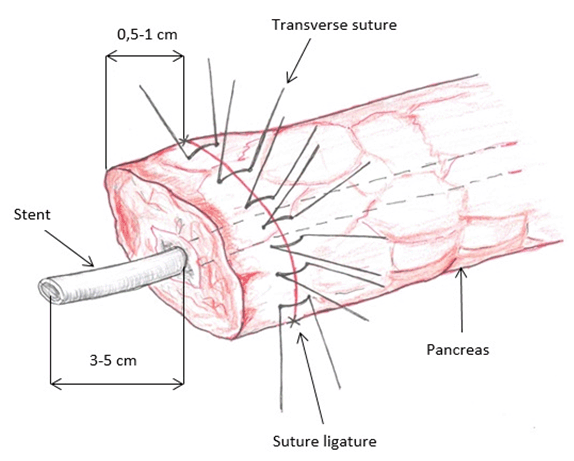
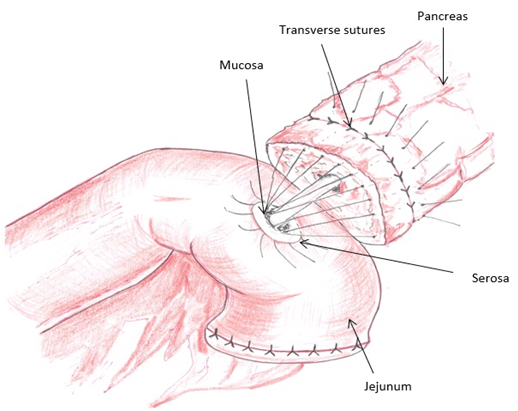
The main characteristic of the presented technique of pancreaticojejunostomy are the transverse sutures on the pancreas. These sutures have the task to prevent fragmentation of the pancreatic parenchyma and also to provide a secure base for interrupted sutures placed immediately after. In this study, the postoperative mortality rate was 6%, corresponding to the figures from the literature, which are between 2% and 9%, while the postoperative morbidity of 28% was lower than figures from the literature, which range from 35–43% (p>0.05) [14] [15][16][17][18]. A review of literature which covered 13 major studies and 3268 patients showed that the incidence of pancreatic fistula after cephalic pancreaticoduodenectomy was 12.9% [19]. In the presented study, postoperative pancreatic fistula occurred in three patients, which is 6% (p > 0.05). We believe it to be particularly significant that in two patients, according to the criteria of the ISGPF, were grade A fistulas, which have no clinical significance, whilst in one patient a grade C fistula occurred, which required surgical re-intervention. In order to reduce the incidence of pancreatic fistula, various techniques for the creation of pancreaticojejunostomy have been described. The two, most used, are the end-to-side duct-to-mucosa pancreaticojejunostomy and the invagination technique [9]. A randomized controlled study in 2009 compared these two techniques, and according to the results, the incidence of postoperative pancreatic fistula with the invagination technique was 12% and with the duct-to-mucosa technique, 24%. The authors also describe a significantly higher incidence of postoperative pancreatic fistula in patients with soft pancreas. According to this research, the incidence of postoperative pancreatic fistula in presence of soft pancreas was 27% [20]. However, a meta-analysis in 2011, which encompassed ten randomized control studies and 1408 patients, did not show any statistical difference in the incidence of postoperative pancreatic fistula, regardless of the technique for pancreatic reconstruction used [21]. An independent predictor of the increased risk of the occurrence of pancreatic fistula is certainly a soft pancreas [10] [22] [23]. Several factors are mentioned as a reason for the increased incidence of pancreatic fistulas in cases of soft pancreas. When tying the sutures, the thread easily cuts into the fragile tissue of a soft pancreas and the anastomosis becomes prone to dehiscence. Also, in a soft pancreas the exocrine function is preserved, which in the end results is more abundant secretion of pancreatic juice, rich in proteolytic enzymes, which further burdens the anastomosis. The diameter of the pancreatic duct is given as a risk factor for the occurrence of postoperative pancreatic fistula [12] [23] [24] [25]. In presented study, postoperative pancreatic fistula occurred in three patients, and in all the patients, the diameter of the pancreatic duct was =3 mm. We find enlarged pancreatic duct in fibrous pancreas with weakened exocrine function [26]. We believe that, perhaps, this is the reason for the reduction in the incidence of postoperative pancreatic fistula after cephalic pancreaticoduodenectomy in patients where the diameter of the pancreatic duct was > 3 mm, with the proviso that this is a case series study. We did not notice any deviation in the incidence of biliary fistula, bleeding and infective complications in relation to the results of larger, controlled randomized studies [14][15] [16][17][18]. On the other hand, we had a lower incidence of delayed gastric emptying, which, after cephalic pancreaticoduodenectomy, according to a recent meta-analysis, was between 24.4% and 29% [27]. The results of this study showed 8% (p < 0.05) (Table 1). Of the 50 patients who underwent the surgical procedure, 13 had elevated preoperative values of serum bilirubin, which was reflected in the postoperative morbidity. In this group, it amounted to 53.8%. Of the seven patients with preoperative hyperbilirubinemia, in whom postoperative complications occurred, three of them underwent operative re-exploration. We can find the reason for this in the harmful effect of prolonged jaundice on liver function, and thereby on the function of the organism as a whole. The observational character of the study, as well as the relatively small sample, is limitations of this study. | ||||||
|
Conclusion
| ||||||
|
Postoperative morbidity was lower in patients in whom a pancreaticojejunostomy was created by the technique presented, although the difference was not statistically significant. Postoperative mortality was within the range of the figures from literature. Postoperative pancreatic fistula occurred in three patients, but clinically significant only in one patient. The results in this study showed overall a lower incidence of postoperative pancreatic fistula than in literature, although it is statistically insignificant. In presented study a, statistically significant, lower incidence of delayed gastric emptying comparing to the literature figures, was found. All this indicates a consistently lower incidence of postoperative complications, but for definite confirmation of our results further interventional studies on a larger sample are necessary. | ||||||
|
References
| ||||||
| ||||||
|
[HTML Abstract]
[PDF Full Text]
|
|
Author Contributions:
Zijah Rifatbegović – Substantial contributions to conception and design, Analysis and interpretation of data, Drafting the article, Final approval of the version to be published Jasmin Hasanović – Substantial contributions to conception and design, Analysis and interpretation of data, Drafting the article, Final approval of the version to be published Amra Meštic – Acquisition of data, Drafting the article, Final approval of the version to be published Emir Ahmetašević – Acquisition of data, Analysis and interpretation of data, Drafting the article, Final approval of the version to be published Amir Tursunović – Acquisition of data, Critical revision of the article, Final approval of the version to be published Goran Imamović – Substantial contributions to conception and design, Revising it critically for important intellectual content, Final approval of the version to be published |
|
Guarantor of submission
The corresponding author is the guarantor of submission. |
|
Source of support
None |
|
Conflict of interest
Authors declare no conflict of interest. |
|
Copyright
© 2016 Zijah Rifatbegović et al. This article is distributed under the terms of Creative Commons Attribution License which permits unrestricted use, distribution and reproduction in any medium provided the original author(s) and original publisher are properly credited. Please see the copyright policy on the journal website for more information. |
|
|