

| Table of Contents |  |
|
Original Article
| ||||||
| Laparoscopic partial cholecystectomy: A way of getting out of trouble | ||||||
| Peter Daechul Yoon1,2, Tony Pang1,2, Mehan Siriwardhane1,2, Arthur Richardson1,2, Michael Hollands1,2, Henry Pleass1,2, Emma Johnston1,2, Lawrence Yuen1,2, Vincent Lam1,2 | ||||||
|
1Department of Surgery, Westmead Hospital, Cnr Hawkesbury Road and Darcy Road, Westmead NSW 2145, Australia Sydney, Australia.
2Discipline of Surgery, Sydney Medical School, the University of Sydney, Australia. | ||||||
| ||||||
|
[HTML Abstract]
[PDF Full Text]
[Print This Article]
[Similar article in Pumed] [Similar article in Google Scholar] |


| How to cite this article |
| Yoon PD, Pang T, Siriwardhane M, Richardson A, Hollands M, Pleass H, Johnston E, Yuen L, Lam V. Laparoscopic partial cholecystectomy: A way of getting out of trouble. Int J Hepatobiliary Pancreat Dis 2016;6:68–75. |
|
Abstract
|
|
Aims:
Laparoscopic cholecystectomy (LC) is currently the standard treatment for symptomatic gallstones. In the presence of moderate to severe inflammation when dissection of the cholecystohepatic triangle cannot be safely achieved, laparoscopic partial cholecystectomy (LPC) has been proposed as an alternative to open conversion to prevent bile duct injuries. The aim of this study is to review our experience of the technique.
Materials and Methods: A retrospective review of all patients who underwent laparoscopic cholecystectomy under the upper gastrointestinal surgical unit at Westmead Hospital was undertaken. The study included all emergency and elective cases during a period from February 2012 to February 2014. Demographic, clinical, operative and postoperative characteristics including operative technique, placement of a drain, complications, length of hospital stay and histopathology were collected. Results: A total of 404 patients underwent LC during the two year study period of which 23 were LPC's. Patients who underwent LPC tended to be older and more likely of the male gender. These patients were also more likely to be an emergency operation and have a higher ASA grade compared to the LC group. Length of stay and operative time tended to be longer. There were five (22%) bile leaks postoperatively and all were successfully managed with postoperative ERCP and stenting. The major complication rate was 35% (8/23) with no bile duct injury or perioperative mortality. Conclusion: This current case series adds further evidence to suggest that LPC is a viable alternative to conversion in cases of difficult LC. | |
|
Keywords:
Cholecystitis, Laparoscopic cholecystectomy, Partial cholecystectomy, Subtotal cholecystectomy
| |
|
Introduction
| ||||||
|
Although laparoscopic cholecystectomy (LC) is the standard treatment for symptomatic gallstones the risk of bile duct injury is increased in the presence of severe inflammation or fibrosis of the gallbladder [1] [2][3]. Traditionally, conversion to an open operation is the strategy employed to manage difficult laparoscopic operations. As such, in the presence of moderate to severe inflammation of the gallbladder, the conversion rate to an open operation is significant [1] [4] [5][6]. However, this may be problematic in the modern era, with the reduced experience of surgeons and trainees with the technique of open cholecystectomy [7] [8][9]. An alternative approach proposed to prevent bile duct injuries is laparoscopic partial cholecystectomy (LPC). This is also known as laparoscopic subtotal cholecystectomy. Studies have suggested that it is a safe approach when severe inflammation, fibrosis or aberrant anatomy is encountered [10][11]. The aim of this study is to review our experience and the evaluation of complications and viability of the technique. | ||||||
|
Materials and Methods
| ||||||
|
A retrospective review of all patients who underwent laparoscopic cholecystectomy (conventional total, conversion to open and laparoscopic partial cholecystectomy) in the upper gastrointestinal surgical unit at Westmead Hospital, a tertiary Australian referral centre, was undertaken. The study included all emergency and elective cases during a 24-month period from February 2012 to February 2014. Patients were identified using a prospectively maintained operative database by the unit. Cholecystectomy as part of other major operations such as pancreaticoduodenectomy or hepatectomy was excluded from the study. Demographic, clinical, operative and postoperative characteristics including operative technique used, placement of a drain, complications, length of hospital stay and histopathology were collected. The project was approved by the Human Research Ethics Committee, New South Wales, Australia. Operative technique When the gallbladder cannot be dissected or the anatomy is unclear, our strategy is to first open the gallbladder to orientate the likely position of the cystic duct and therefore the cholecystohepatic triangle. This incision in the gallbladder should be made safely away from the infundibulum, usually at the level of the junction between Hartmanns pouch and the body of the gallbladder. If the gallbladder contains numerous stones, a bag may need to be deployed intra-abdominally and placed under the gallbladder to allow scooping of stones directly into the bag. Once the gallbladder is opened and the operator is oriented, further dissection may allow demonstration of the cholecystohepatic triangle. If further dissection proves to be difficult, partial cholecystectomy is then performed. Common reasons for difficult dissection may include severe inflammation, chronic fibrosis/contraction or aberrant anatomy all of which may lead to obliteration of the cholecystohepatic triangle. Steps for performing LPC are as follows. First, all gallbladder stones are removed, especially in Hartmanns pouch where residual stones in the remnant may lead to recurrent cholecystitis. The opening of the gallbladder is extended and if it is possible to accomplish safely, the back wall is divided to completely disconnect the gallbladder body from Hartmanns pouch and the infundibulum. This will allow the remnant to be closed using a pre-tied ligature loop (PDS Endoloop, Ethicon, CA, USA). If the back wall of the gallbladder is thick and there is significant contraction of the gallbladder, this may not be possible as the shrunken cystic plate may mean that the hilar structures may lie immediately behind the back wall. In this case, we leave the back wall intact and the gallbladder remnant is either closed with sutures or left open for drainage. We always plan to close the gallbladder remnant as much as possible in order to minimize the risk of bile leakage using techniques above. In the situation where it is not possible to close the gallbladder remnant it is left open. A closed-suction drain is left in place after all LPC's. Definitions Patients were divided into three groups for analysis: those who underwent laparoscopic total cholecystectomy, LPC and conversion from laparoscopic to open. Patients who underwent straight up open cholecystectomy were not analyzed as they probably represent a different population of patients with different indications for surgery (e.g. suspected cancer). Paparoscopic partial cholecystectomy technique was divided into patients whose gallbladder remnant was closed and those whose were not closed. Statistical analysis | ||||||
|
Results | ||||||
|
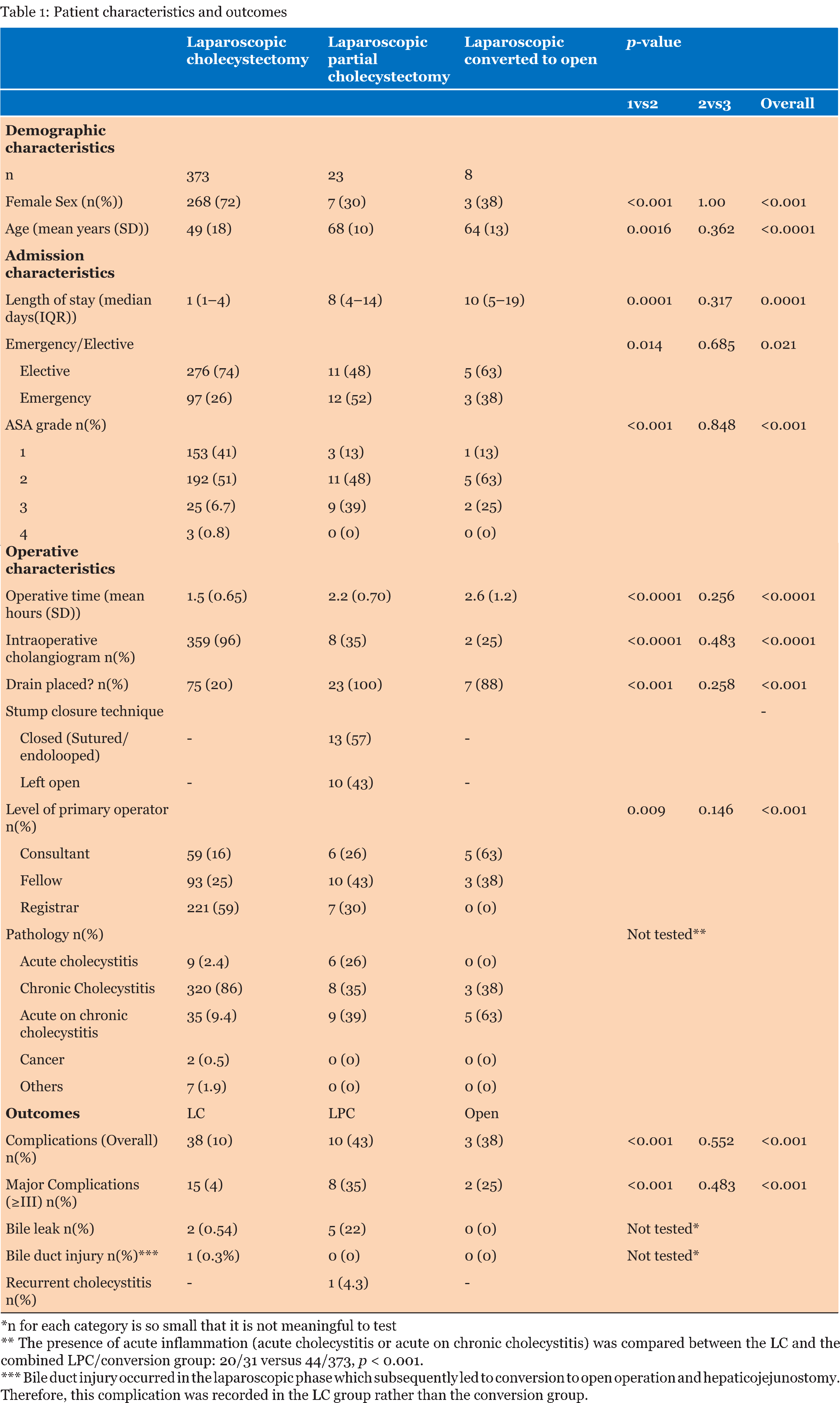
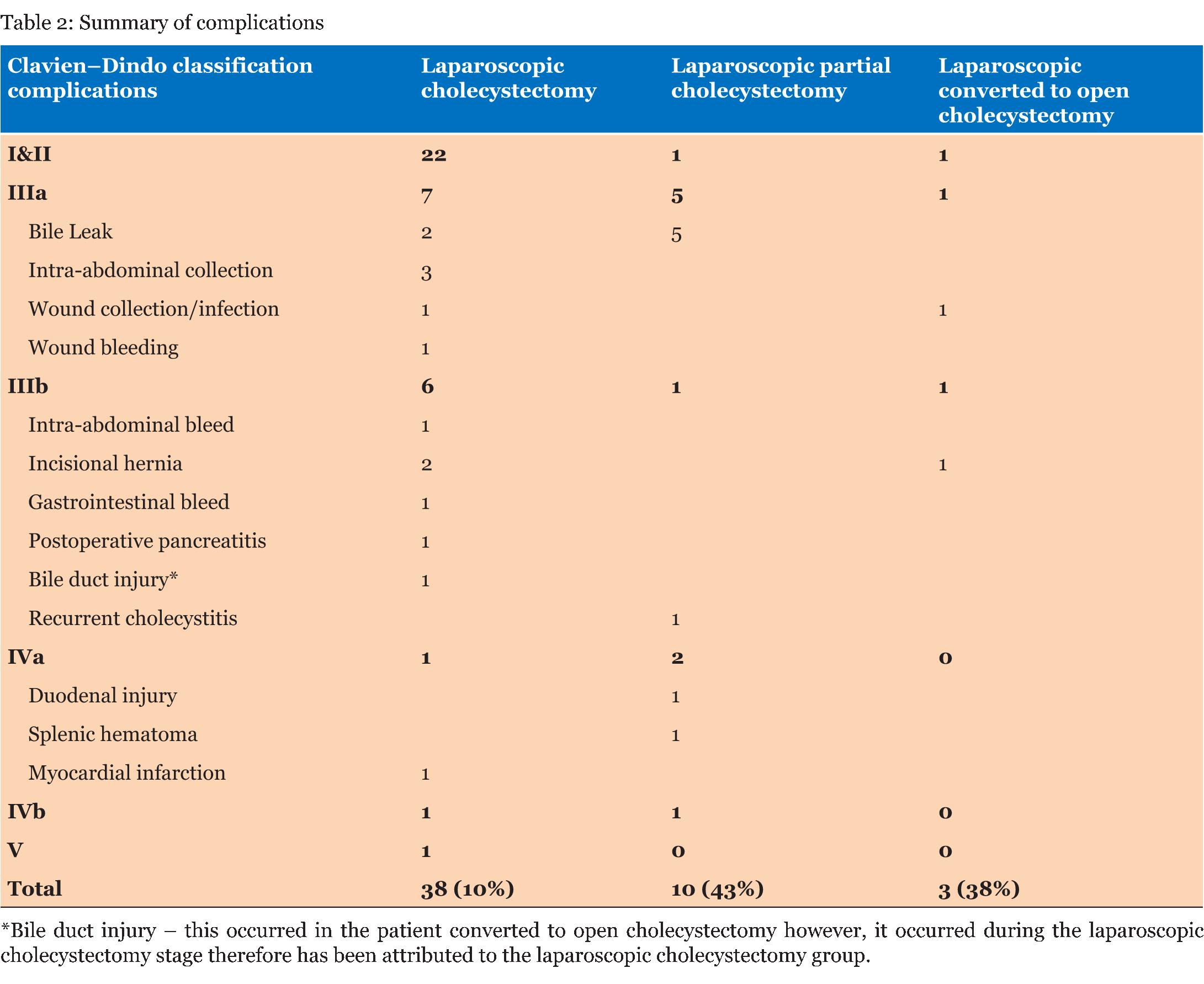
A total of 404 patients underwent laparoscopic cholecystectomy during the two-year study period. The demographic and basic clinical characteristics of this cohort are summarized in Table 1. Patients who underwent LPC and conversion to open operation tended to be older and more likely male gender. These patients were also more likely to have had an emergency operation and have a higher ASA grade compared to the standard LC group. Length of stay and operative time tended to be longer in this group. Intraoperative cholangiogram was performed in a minority of the LPC group (35% versus 96%, p < 0.0001) and drains were placed in all cases postoperatively. As a reflection of the difficulty of surgery and the emergency nature of surgery, consultants or fellows performed most LPC procedures as well as conversion procedures, as opposed to LC where 59% were performed by registrars. In general, the LPC group differed significantly from the LC group, but not with the conversion group. There were eight conversions to open operation. Of these, half were converted to open subtotal (partial) cholecystectomy, a reflection of the fact that conversion does not necessarily make the operation easier. Two patients underwent hepaticojejunostomy – one for bile duct injury (Strasberg type E2) and another for a large cholecystocholedochal fistula. Complications In particular, there were seven bile leaks (n = 5 LPC, n = 2 LC) which were all managed conservatively with postoperative ERCP and biliary stent. Three patients required radiologically guided percutaneous drainage of collections. This was the most common serious complication (≥ grade III) in the LPC group, occurring in 22%. Numerically, this was associated with not closing the gallbladder remnant (40% versus 8%), although this failed to reach statistical significance. A bile duct injury occurred in one case intraoperatively during laparoscopic cholecystectomy and the procedure was converted to laparotomy, open cholecystectomy and hepaticojejunostomy. Two patients from the LPC group developed hemorrhagic shock from postoperative intra-abdominal bleeding. One patient, with a background of atrial fibrillation treated with warfarin, had a splenic hemorrhage postoperatively and subsequently underwent open splenectomy. The patient was admitted to the intensive care unit (ICU) for brief inotropic support (grade IVa) and recovered well with subsequent discharge after four days. The second patient returned one week post LPC with a cystic arterial bleed that was treated by angioembolization successfully. This was followed by percutaneous drainage of the hematoma. However, the patient developed multi-organ failure (grade IVb) and required ICU admission. Ultimately, this patient recovered satisfactorily and was able to be discharged on 18 days postoperatively. One patient with a background history of cirrhosis who required LPC secondary to acute emphysematous cholecystitis developed an enterobiliary fistula to the duodenum which required a laparotomy, liver resection, repair of duodenum with an omental patch and insertion of a feeding jejunostomy. This patient required an ICU admission for respiratory failure perioperatively (grade IVa) but ultimately recovered and was discharged three weeks after the initial LPC. Other significant complications in the LPC group included a patient who developed recurrent cholecystitis presenting as a cholecystocutaneous fistula who required a completion cholecystectomy (grade IIIb). | ||||||
| ||||||
|
| ||||||
| ||||||
|
Discussion
| ||||||
|
The first description of an open partial cholecystectomy was published in 1985 by Bornman and laparoscopic techniques were described in 1993 [15] [16]. Since then, various surgical techniques have been described, contributing to the confusion regarding the definition of LPC. Furthermore, LPC is also known by some as laparoscopic subtotal cholecystectomy and these two terms should be considered synonymously. Laparoscopic cholecystectomy is currently the "gold standard" for the management of symptomatic gallstone disease [17] [18]. One consequence of the modern surgeon's competence in LC is the corresponding decline in experience with the open technique. This is especially true for surgeons who have trained entirely during the laparoscopic era. The learning curve of open cholecystectomies is historically well recognized. A Swedish group showed at least 66% of major bile duct injuries during open cholecystectomy were attributable to surgical trainees being the primary surgeon on their 25th to 100th cholecystectomies [19]. This peak incidence of bile duct injury rapidly decreased after their 100th operation implying that up to 100 cases is required for surgeons to reach competence. In the modern era where open conversion rates are as low as 0.3%, reaching this volume may be impossible during the career of a non-specialist general surgeon [20]. Data from two large series have suggested that risk factors which predict conversion to open cholecystectomy included: male sex, older age, previous abdominal surgery, acute cholecystitis, and common bile duct stones [21] [22]. This is consistent with our findings – old age, male sex, emergency procedure, and ASA grade to differ significantly between LC and LPC/conversion groups. In particular, we noted that 20/31 (65%) of the LPC/conversion patients as compared to 44/373 (12%) (p < 0.001) had evidence of acute cholecystitis on histopathological examination. This is important as early LC (rather than delayed) is generally the preferred approach for the management of acute cholecystitis. Certainly, in difficult cases younger surgeons may be more comfortable continuing laparoscopically than simply converting to an open procedure given their limited open experience. This may in fact be sensible, given that the risk of bile duct injury is still persistent even after conversion [23]. This has been suggested to be due to the lack of optical field magnification by laparoscopy and remaining difficulties dissecting the bile ducts in severe cholecystitis [23]. In fact, this salient point is borne out in our current data where half of patients converted to open operation underwent open partial cholecystomy. Of the remaining four patients, two underwent hepaticojejunostomy, leaving only two patients undergoing a "true" conversion to open total cholecystectomy. This implies that conversion does not necessarily make the operation easier, even in the context of a specialist unit. Our current two year data suggests that LPC is an appropriate alternative to conversion. The conversion rate in our series was 2.0% which was comparable (in the lower range) to other international series which ranged from 3.0–5.6% [24] [25]. This is despite the fact that 16% of our cases had evidence of acute cholecystitis. In addition, our series had one case (0.3%) of bile duct injury, which was identified during LC in severe acute cholecystitis patient with difficult the cholecystohepatic triangle dissection. Importantly, no cases of bile duct injury occurred in the LPC or conversion groups. This rate of bile duct injury is comparable to that found in literature. Krahenbuhl et al. reported an overall bile duct injury rate of 0.3% in a large series of 12,111 patients from 84 surgical institutions [1]. In cases of severe chronic cholecystitis, the incidence was as high as 3%. Furthermore, we found comparable outcomes in the LPC and conversion groups for length of stay, operative time, intraoperative cholangiogram rates and complication rates. Bile leak was the most common major complication after LPC. Recent meta-analysis of a LPC cohort by Henneman's group showed that postoperative bile leakage occurred in 10.6% of LPC with a major bile duct injury in only 0.2% [26]. In comparison, our LPC data showed bile leak rate of 22% (5/22) without any bile duct injury. When bile leak is present most authors took a stepwise approach of keeping in the drain or inserting a new drain then performing an ERCP and sphincterotomy which generally led to resolution of the leak without significant additional morbidity [20] [24] [25]. Hence we believe LPC is a good "bail out" strategy in difficult cholecystectomies as an alternative to conversion. With regards to the technical aspects of LPC, Henneman categorized the different techniques of LPC into four groups [26]. Essentially, the two characteristics which define these four techniques are (a) whether the back wall is resected; (b) whether the stump/gallbladder remnant was closed or not. Due to the limited data from small case series without direct comparison between techniques, no single technique is considered ideal. However, with regards to the latter (closure of the remnant), Henneman's systematic review appear to suggest a decrease in bile leak rate in patients where the remnant was closed [26]. This is consistent with our results where a non-significant trend to reduction in incidence of bile leak was found in patients where the remnant was closed (8% versus 40%, p = 0.13). When a remnant posterior wall stump or Hartmanns pouch is closed there is an important theoretical issue of continued gallstone formation. It has been reported in literature that 2.2–5% patients develop symptomatic gallstone recurrence [26]. This has been historically treated via endoscopic sphincterotomy or completion LC. Notably, some studies have raised the issue of possible remnant cholecystitis [27] [28]. In our series, we had one patient who required a completion cholecystectomy for the development of a cholecystocutaneous fistula, likely as a result of recurrent cholecystitis within the remnant. Given the lack of evidence of increased rates of recurrent cholecystitis, and evidence of probable decreased rates of bile leak, we advocate closure of the gallbladder remnant whenever possible. In particular, we found that if the back wall could be mobilized, the use of a pre-tied ligature loop placed at the level of the Hartmann's pouch is a convenient way to achieve closure. Suture closure is an alternative although this requires more time, laparoscopic skills and at least anecdotally is more likely to fail. One of the limitations of our study was that our LPC technique varied amongst different trainees and surgeons. This is a well-identified issue in literature as seen in the recent systematic review by Henneman [26]. Whilst a standardized technique which can be tested in a randomized prospective setting would be ideal, the reality is that the indication for LPC varies from surgeon to surgeon and from case to case. Therefore, variations of technique are a necessary evil. Furthermore, our series were retrospective analysis in nature and lacked long-term follow-up of the patients. This is often difficult in the Australian public hospital setting where patients are routinely followed-up postoperatively with a single consultation then discharged from the service. Data regarding long-term complications, especially recurrent gallstone disease, is therefore less reliable. In addition, Westmead Hospital has an Acute Surgical Unit where all surgical emergency cases are initially assessed prior to being referred to a sub-specialty team such as upper gastrointestinal u nit. As a consequence, some emergency cholecystitis patients would have underwent cholecystectomies under a different general surgical team. These patients would have not been captured by the specialty unit surgical database. However, from our experience, the majority of gallbladder operations are performed by our unit and we expect the numbers lost from our catchment would be relatively low. | ||||||
|
Conclusion
| ||||||
|
In summary, this current case series adds further evidence to suggest that laparoscopic partial cholecystectomy is a viable alternative to conversion in cases of difficult laparoscopic cholecystectomy. | ||||||
|
References
| ||||||
| ||||||

|
[HTML Abstract]
[PDF Full Text]
|
|
Author Contributions:
Peter Daechul Yoon – Substantial contributions to conception and design, Acquisition of data, Analysis and interpretation of data, Drafting the article, Revising it critically for important intellectual content, Final approval of the version to be published Tony Pang – Analysis and interpretation of data, Revising it critically for important intellectual content, Final approval of the version to be published Mehan Siriwardhane – Analysis and interpretation of data, Revising it critically for important intellectual content, Final approval of the version to be published Arthur Richardson – Analysis and interpretation of data, Revising it critically for important intellectual content, Final approval of the version to be published Michael Hollands – Analysis and interpretation of data, Revising it critically for important intellectual content, Final approval of the version to be published Henry Pleass – Analysis and interpretation of data, Revising it critically for important intellectual content, Final approval of the version to be published Emma Johnston – Analysis and interpretation of data, Revising it critically for important intellectual content, Final approval of the version to be published Lawrence Yuen – Analysis and interpretation of data, Revising it critically for important intellectual content, Final approval of the version to be published Vincent Lam – Analysis and interpretation of data, Revising it critically for important intellectual content, Final approval of the version to be published |
|
Guarantor of submission
The corresponding author is the guarantor of submission. |
|
Source of support
None |
|
Conflict of interest
Authors declare no conflict of interest. |
|
Copyright
© 2016 Peter Daechul Yoon et al. This article is distributed under the terms of Creative Commons Attribution License which permits unrestricted use, distribution and reproduction in any medium provided the original author(s) and original publisher are properly credited. Please see the copyright policy on the journal website for more information. |
|
|