

| Table of Contents |  |
|
Case Report
| ||||||
| Acute pancreatitis secondary to topical and oral treatment with mesalamine in a patient with ulcerative colitis | ||||||
| Uribarri-Gonzalez L1, Acosta MB1, Dominguez-Muñoz JE1 | ||||||
|
1Gastroenterology Department, University Hospital of Santiago de Compostela Spain.
| ||||||
| ||||||
|
[HTML Abstract]
[PDF Full Text]
[Print This Article]
[Similar article in Pumed] [Similar article in Google Scholar] |


| How to cite this article: |
| Uribarri-Gonzalez L, Barreiro-de Acosta M, Dominguez-Muñoz JE. Acute pancreatitis secondary to topical and oral treatment with mesalamine in a patient with ulcerative colitis. Int J Hepatobiliary Pancreat Dis 2016;6:64–67. |
|
Abstract
|
|
Introduction:
Derivatives of 5-aminosalicylic acid (5-ASA) as Claversal® used for the treatment of inflammatory bowel disease may induce acute pancreatitis both orally as topically. Mesalazine is the only treatment used in our environment within the compounds of 5-ASA, due to other molecules not being available. It is available for both oral and topical, being topical form highly relevant considering that its compounds are rapidly absorbed once acetylated, resulting in inactive metabolites. Nowadays the mechanism or pathway by which it is produced is not really clear, neither the relationship with the intervals between exposure of treatment nor the onset of clinical symptoms, due to some cases in which there was no relationship with the duration, which was our case.
Case Report: We report one case of 5-ASA induced pancreatitis. A 35-year-old male whose first episode was secondary to oral form with subsequent recurrence after beginning with topical form. Conclusion: We would like to point out that after an episode of pancreatitis due to oral mesalamine, topical mesalamine should not be prescribed. | |
|
Keywords:
Mesalamine, inflammatory bowel disease, pancreatitis, topical treatment
| |
|
Introduction
| ||||||
|
Oral and topical formulations of 5-aminosalicylic (5-ASA) are known as the treatment of choice according to the guidelines for mild to moderate ulcerative colitis [1]. Now 5-ASA are the first line treatment in this group of patients, but previously, the sulfasalazine had been the traditional treatment, reducing their use, due to having more side effects, most of them attributed to inactive component, the sulfapyridine. In literature has been published that approximately 10–45% of patients are unable to tolerate the medication due to adverse reactions [2]. Therefore, products of aminosalicylates have been developed independent of this part, such as topical and oral forms of 5-aminosalicylate acid (5-ASA). They have demonstrated greater safety profile due to having few secondary adverse reactions. There have been described few secondary adverse reactions to oral form (Claversal®) as acute pancreatitis [3], hepatotoxicity [4], renal toxicity [5], myocarditis [6] and neuropathy [7], happening less frequently secondary to topical component, because of its limited systemic absorption. Moreover, this complication typically appears within the first days or weeks after initiation of therapy, and only one case has been published after long-term 5-ASA acid therapy [8]. We report a case of acute pancreatitis caused first by 5-ASA oral and repeated by 5-ASA suppositories in a patient with ulcerative colitis. | ||||||
|
Case Report
| ||||||
|
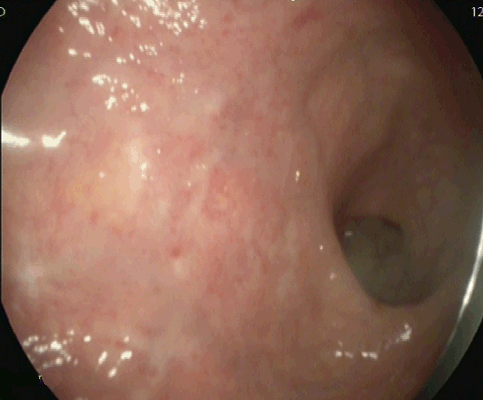
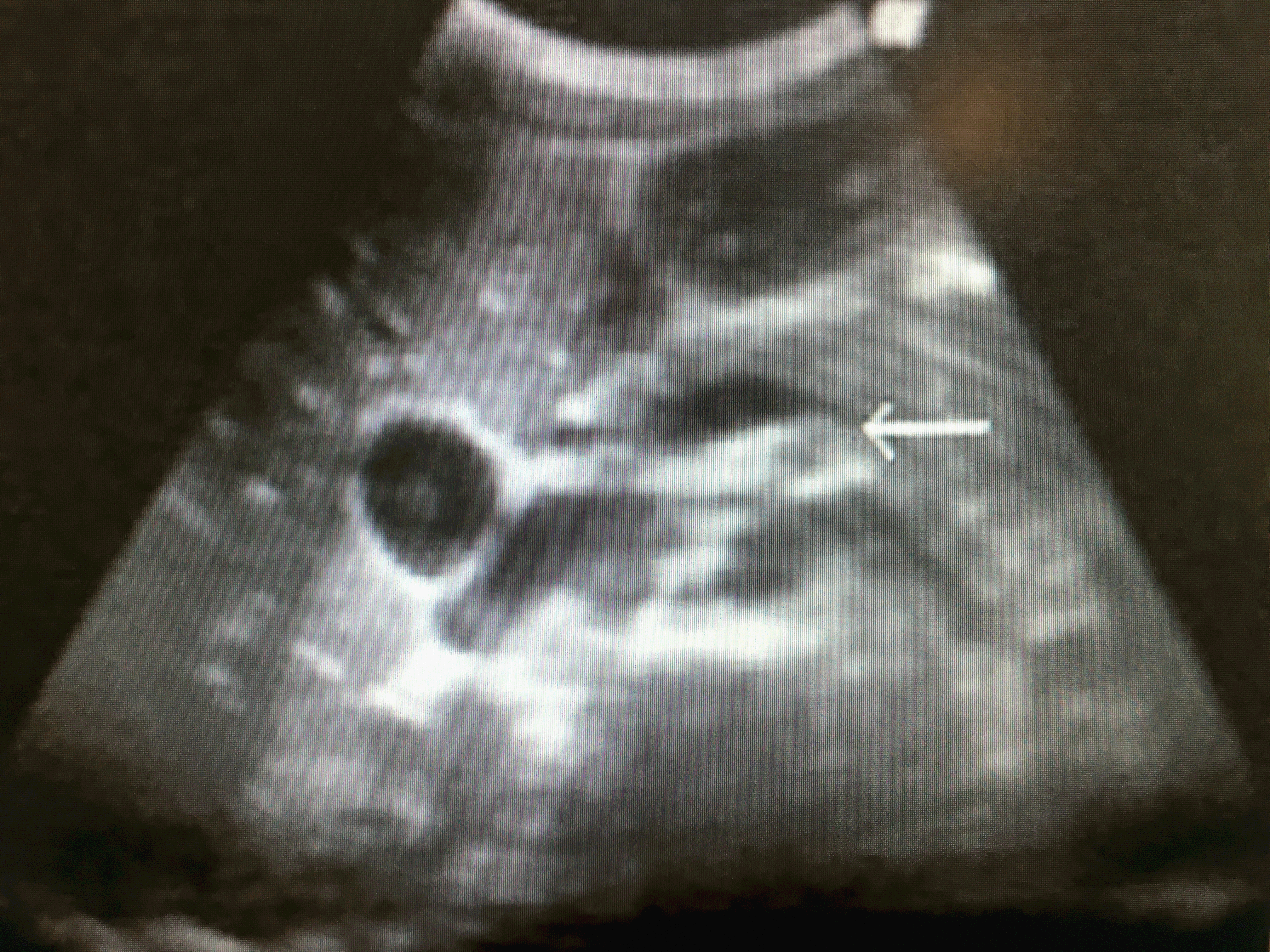
A 35-year-old male was hospitalized with severe mild-epigastric pain from the day before. He was diagnosed with Ulcerative colitis, confirmed by colonoscopy and biopsy two years ago (Figure 1). The dose of mesalamine was raised to 3 g per day after a new flare four weeks earlier. Physical examination was normal except for mild tenderness in the epigastrium. The patient had no fever and jaundice. Laboratory examinations were normal except increased serum lipase of 738U/L. Ultrasonography demonstrated no dilatation of intrahepatic ducts or common bile duct, no stones, no necrosis or fluid accumulation but pancreatic enlargement was present (Figure 2). Different etiologies like biliary, alcoholic and hyperlipidemia were ruled out through blood tests, medical record and imaging (X-ray radiography, ultrasonography). Finally, drug-induced pancreatitis was the diagnosis and withdrawal of oral mesalamine was performed. Due to the benign course the patient did not follow a maintenance treatment. Two years later, he had a new flare with rectal bleeding, and topical suppositories of mesalamine were prescribed. Two weeks later, he was hospitalized for abdominal pain with serum amylase of 231 U/L and serum lipase of 1256 U/L. During hospitalization other etiological factors of pancreatitis were ruled out. Conservative measures and mesalamine withdrawal resulted in complete recovery. Clinical remission of Ulcerative colitis was obtained by topical steroid administration. After the last episode, the patient has not received mesalamine again and he has not resubmitted symptoms related to acute pancreatitis and it is without maintenance treatment, but only topical steroids during flares. | ||||||
| ||||||
| ||||||
|
Discussion
| ||||||
|
Oral, topical or combined mesalamine is the recommended treatment in mild to moderate Ulcerative colitis, due to its high efficacy and safety profile [1]. 5-ASA is usually well tolerated, but various side effects have been described secondary to oral administration including skin, hematological, hepatic, cardiac, pulmonary, digestive, and renal disorders [3] [4][5][6][7]. Other drugs used in IBD therapy may induce pancreatitis like steroids [9], sulfasalazine [10], 6-mercaptopurine [10] [11], and metronidazole [9]. Reports on the same complication after rectal administration have been very rare [12]. There are only two publications where the same complication after rectal administration in an adult with ulcerative colitis, due to its limited systemic absorption are described [12][13]. Ruderman noted minimal adverse effects of topical and oral 5-ASA therapy in IBD and concluded that optimal drug dosage, duration of therapy, and appropriate dosing intervals had yet to be defined [14]. In pharmacokinetic studies, the determined 5-ASA absorption postoperative was approximately 33% [15] and rectal absorption was 10–35% of the doses given [13]. Other studies have determined the relationship with the intervals between exposure to treatment and the onset of clinical, between two days and two weeks [15], but there are other studies in which there is no relationship with the time intervals. [8]. In those who have developed a pancreatitis secondary to oral mesalamine [9] in case of a new flare; topical mesalamine could be an option instead of having to use more aggressive drugs like steroids. The evidence of the possibility of a new episode of pancreatitis due to topical treatments is really scarce and reports on the same complication after rectal administration have been very rare [13]. In present case, autoimmune pancreatitis was discarded because the patient improved after mesalamine withdrawal and did not need more steroid systemic treatment in the following years. | ||||||
|
Conclusion
| ||||||
|
We must not forget that both the pharmacokinetics of the drug as a possible hypersensitivity reaction to them, any drug nowadays is not totally harmless. With this clinical case we would like to point out that after a pancreatitis due to oral mesalamine, topical mesalamine should not be prescribed. | ||||||
|
References
| ||||||
| ||||||

|
[HTML Abstract]
[PDF Full Text]
|
|
Author Contributions
Laura Uribarri-Gonzalez – Substantial contributions to conception and design, Acquisition of data, Analysis and interpretation of data, Drafting the article, Revising it critically for important intellectual content, Final approval of the version to be published Manuel Barreiro-de Acosta – Analysis and interpretation of data, Revising it critically for important intellectual content, Final approval of the version to be published J. Enrique Dominguez-Muñoz – Analysis and interpretation of data, Revising it critically for important intellectual content, Final approval of the version to be published |
|
Guarantor of submission
The corresponding author is the guarantor of submission. |
|
Source of support
None |
|
Conflict of interest
Authors declare no conflict of interest. |
|
Copyright
© 2016 Laura Uribarri Gonzalez et al. This article is distributed under the terms of Creative Commons Attribution License which permits unrestricted use, distribution and reproduction in any medium provided the original author(s) and original publisher are properly credited. Please see the copyright policy on the journal website for more information. |
|
|