

| Table of Contents |  |
|
Review Article
| ||||||
| Surgery for early stage hepatocellular carcinoma | ||||||
| Luis Cesar Bredt1, Tiago Cesar Mierzwa1, Alex Francovig Rachid1, Francisco Guilherme Fernandes1, Julio Cezar Zanini1 | ||||||
|
1Department of Abdominal Surgery, Hepatobiliary Section, Cancer Hospital-UOPECCAN, Cascavel, PR, Brasil.
| ||||||
| ||||||
|
[HTML Abstract]
[PDF Full Text]
[Print This Article]
[Similar article in Pumed] [Similar article in Google Scholar] |


| How to cite this article |
| Bredt LC, Mierzwa TC, Rachid AF, Fernandes FG, Zanini JC. Surgery for early stage hepatocellular carcinoma. Int J Hepatobiliary Pancreat Dis 2015;5:47–55. |
|
Abstract
|
|
Hepatocellular carcinoma (HCC) is the third leading cause of cancer-related death worldwide, and the curative treatment is available only for tumors detected in early stage. In a critical analysis of the therapeutic options in early stage HCC three potential curatives therapies are possible in early stage HCC: total hepatectomy with liver transplantation (LT), partial hepatectomy and radiofrequency ablation (RFA) of very small tumors. Total hepatectomy with LT has proven to be the best treatment for operable and resectable disease (BCLC 0 and A) in a cirrhotic liver, the liver resection, RFA, transarterial chemoembolization (TACE) or percutaneous injection of alcohol (PIA) can be considered for those patients with waiting list time up to six months. Partial hepatectomy as definitive therapy should be used only for patients with patients in Child-Pugh A and B without portal hypertension. In patients with inoperable but localized disease (BCLC A), the RFA or PIA can be indicated.
| |
|
Keywords:
Early Stage, Hepatocellular carcinoma, Therapeutic options, Curative treatments
| |
|
Introduction
| ||||||
|
Hepatocellular carcinoma (HCC) is the sixth most common type of cancer worldwide and the leading cause of death among patients with cirrhosis [1]. Most patients with HCC are cirrhotic due to viral hepatitis or hepatic disease induced by alcohol, but more recent data suggests that the metabolic syndrome associated with non alcoholic liver disease may be an important cause of HCC. The molecular pathogenesis of HCC is extremely complex and heterogeneous, and to date the molecular information has not impacted on treatment decisions [2]. Various HCC staging systems applied in clinical practice and prognostic assessment classifications have been proposed, including the Child-Pugh classification [3], the Index of Cancer of the Liver Italian Program (CLIP) [4], Barcelona Clinic Liver Cancer (BCLC) staging [5], Grouped'Etude et Traitement du Carcinome Hépatocellulaire (GETCH) [6], Chinese University Prognostic Index (CUPI) [7], Japan Integrated Staging (JIS) score [8], modified JIS (mJIS) score [9], Okuda staging [10], the Tokyo score [11], and the Model for End-Stage Liver Disease (MELD) stratification system for organ allocation [12]. The BCLC staging system [5] has been proposed as the standard method for the assessment of prognosis and therapeutic orientation in Europe and the United States [13] [14] , it classifies patients into five stages and includes Child-Pugh [3], Okuda [10], TNM classifications [15] and performance status scoring [16]. The consensus of the American Hepato-Pancreato-Biliary Association (AHPBA) in 2010 has pointed to the BCLC classification as suitable for therapeutic recommendation [17], and the accurate stage evaluation is essential for assessing tumor resectability, therapy choice and prognosis. Therapeutic approaches to HCC can be classified into three categories: potentially curative, palliative and symptomatic, according to patients different stages, adopting tumor burden, liver function and physical status as criteria. Each stage is linked to the ?rst-line treatment option that is proposed according to the available scientific evidence [2]. Less than 20% of cases are potentially eligible for potentially curative treatment [18] [19], with the majority of patients with HCC being thrilled to symptomatic or palliative treatment. In the specific scenario of early stage HCC, the diagnostic criteria for these lesions have been well-de?ned (including nodules between 1 and 2 cm) and widely accepted, and the most important is that effective treatment is available for tumors detected at an early stage [2]. Potentially curative treatments for early tumors usually include surgical modalities, such as hepatic resection and liver transplantation, with promising survival rates up to 75% at 5 years [20]. | ||||||
|
Resection versus Ablation for Very Early Stage HCC
| ||||||
|
In the context of early stage lesions, a very early HCC is defined as asymptomatic solitary HCC with a diameter of <2 cm, and the treatment recommended by the European Association for the Study of Liver and American Association for the Study of the Liver (EASL-AASLD) for patients presenting with HCC in very early stage and liver function Child-Pugh A is resection, with an overall and recurrence-free survival rates at five years after liver resection of 70 and 68%, respectively. However, the radiofrequency ablation (RFA) can achieve equal acceptable outcomes for very early HCC, with 5-years disease-free survival of 62% and 5-years overall survival of 78%. Moreover, it have been suggested that RFA should be considered as first-line therapy, even when resection is possible, because it is associated with fewer side effects, but whether surgical resection is superior to RFA remains controversial [14] [21]. Wang et al. [22] suggested that although surgical resection was equivalent to RFA in terms of overall survival, the resection provided a free survival at five years of 40.7% against 29.3% of disease patients with RFA (p = 0.006). However, Peng et al. [23] reported that RFA was associated with better overall survival compared with surgical resection, and the overall five-year survival was 71.9% with RFA and 62.1% with surgical resection, concluding that the FRG was more effective and safe in patients with HCC smaller than 2 cm. Therefore, more trials are needed before RFA may be recommended as first-line therapy for very early HCC as a substitute for surgical resection. | ||||||
|
Liver Transplantation And Resection For Early Stage HCC
| ||||||
|
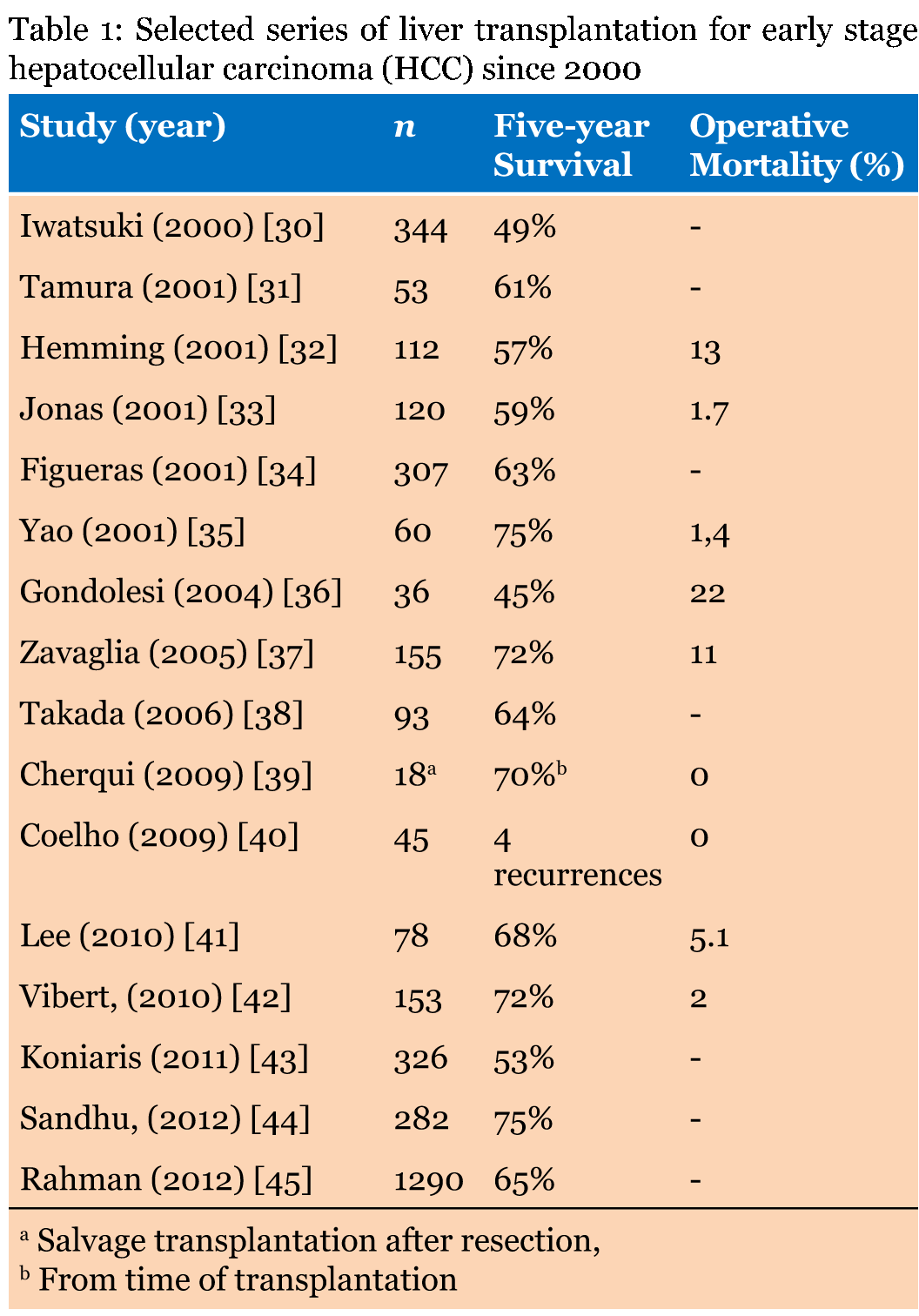
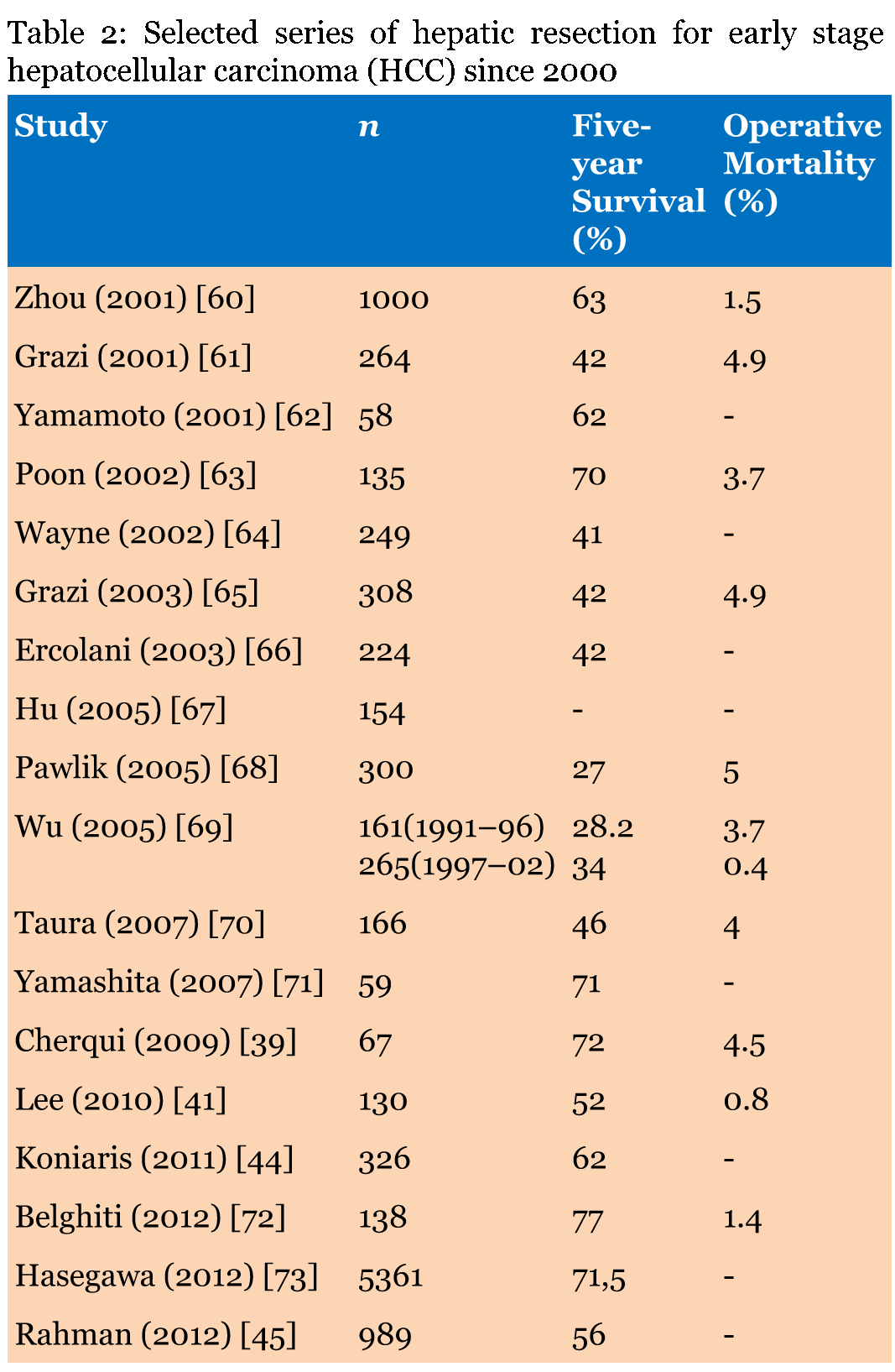
Early stage HCC is defined according to the Milan criteria [24] as follows: a single tumor nodule = 5 cm in diameter or =3 nodules =3 cm in diameter, and the best candidates for liver transplantation are those with liver cirrhosis and only <5 cm tumor or up to three tumors <3 cm, without signs of vascular invasion or extrahepatic disease (Milan criteria), with an overall survival of 85% at 4 years [24][25]. The presence of tumor >5 cm, vascular invasion, poorly differentiated tumors and lymph node metastasis are important negative predictive factors that contraindicate conventional liver transplantation [26] [27]. According to the EASL-AASLD guidelines [14], the ideal approach for early stage HCC is liver transplantation, but RFA can be a substitute when transplantation is not feasible, and liver resection should be considered when patients present with a solitary tumor without portal hypertension [13]. Farinati et al. [28] reported that for patients with early stage HCC, liver transplantation offers the best chance of survival (106 months) compared to surgical resection (52 months), RFA (62 months), percutaneous ethanol injection (PEI, 44 months), and transarterial chemoembolization (TACE, 34 months). In a recent meta analysis [29] the five-year survival after liver transplantation for early stage HCC was 63%, whereas previous reports presented heterogeneous results [30] [31] [32] [33] [34] [35] [36] [37] [38] [39] [40] [41] [42] [43] [44] [45]. A recent analysis of the International Registry of Hepatic Tumors Transplant [46] demonstrated in the last 20 years there has been an increase in the cure rate and a reduced morbidity (Table 1). Both in America and in Europe the number of patients waiting for a liver exceeds the number of performed transplants per year, less than one patient out of three of those enlisted receives LT [47]. Clearly, the selection of patients according to risk of recurrence and morbidity/mortality with the procedure is essential to optimize the use of the few available organs [48]. After the implementation of the Milan Criteria [24] the number of LTs for HCC has increased worldwide and currently in Europe about 27% of all LT patients have HCC [49]. Thus, major emphasis has been placed on policies and priorities regarding waiting list management [50] [51] [52] [53], but the heterogeneity of tumor presentation and the variability of response to treatments impedes an accurate prediction of progression. The controversies persist and no strategy has been uniformly adopted [2]. The best candidates for surgical resection are the exclusive Child-Pugh A patients with normal bilirubin values??, the absence of clinical signs of portal hypertension (platelet count, splenomegaly and esophageal varices), only tumor diameter <5 cm (without vascular invasion), asymptomatic and MELD <8 [54][55] [56]. Hyperbilirubinemia, portal hypertension and clinical deterioration criteria should be considered inoperable despite the resectability [57]. The extent of resection depends on the patient's liver function, and in case of absence of cirrhosis, up to two thirds of the liver can be removed surgically. A useful tool for evaluation of marginal candidates for liver resection is testing of indocyanine green clearance, and the portal vein embolization may be useful in the induction of hepatic hypertrophy, when the estimated volume of remaining liver is insufficient. Larger lesions (T2 tumors), when possible, should be treated with major hepatic resections, since these enlarged surgical resections are associated with increased progression-free survival [58] . Tumor recurrence in those patients undergoing partial hepatectomy for HCC is predominantly intra-hepatic, and usually occurs in the first three years of follow-up [59]. The five-year survival with surgery is variable according the recent series of liver resection for HCC [39] [41] [44][45] [60] [61] [62] [63] [64] [65] [66] [67] [68] [69] [70] [71] [72] [73], and in the specific scenario of early stage HCC, Dhir et al. [29] described in his metanalysis a five-year survival of 53% (Table 2). Worldwide the approach to resection versus transplantation varies depending upon local resources, expertise and donor availability. The results of resection and transplantation are difficult to summarize since not a single surgical modality may ?t all HCC presentations, being individual components of the patients crucial for decision making [2]. Resection and transplantation achieve the best outcomes in well-selected candidates (five-year survival of 60–80%) and compete as the ?rst option in patients with early tumors and well-preserved liver function on an intention-to-treat analysis [68]. Recent meta-analysis showed that both surgical resection and liver transplantation are options with curative potential in patients with early stage HCC without cirrhosis or well compensated cirrhosis, with survival at five years 58% (transplantation: 63%; surgery: 53%) [55]. In a retrospective study comparing surgical resection versus transplantation for patients with early stage HCC, MELD = 8 and no evidence of hepatitis there was no statistical difference (p=0.21) in survival at five years (41 versus 69%, respectively) [56]. When assessing the cost impact of the proposed treatment and its effectiveness, liver transplantation is beneficial if performed between 6 and 12 months of waiting, and liver resection is favored those whose transplant is scheduled waiting more than 18 months [74] [75]. Cirrhotic patients eligible for liver transplantation and who have resectable lesions and favorable clinical criteria for resection (portal vein pressure <10 mmHg, absence of thrombocytopenia and preserved liver function) should also be considered initially for curative liver resection [76] [77] [78]. The age can be a limiting factor for liver transplant, which should be restricted to patients in good physical condition and below 70 years of age. As commented, despite the excellent efficacy of LT in treatment of early stage HCC, the shortage of donor livers or the drop out in the waiting list because of progression leads to the necessity of alternative therapies for early stage HCC meeting Milan criteria, such as RFA or resection, when feasible. Although a recent meta-analysis have pointed surgical resection as a superior modality of therapy compared to RFA in terms of overall survival, recurrence-free survival, and local recurrence rate, the analysis was primarily based on non-randomized studies, so the superiority of surgical resection remains controversial. In this scenario, liver resection can serve as a "bridge" for LT while the patient awaits a donor liver, being the radiofrequency ablation a similar alternative in non-superficial nodules away from the biliary bifurcation. In these situations, the hepatectomy offers advantages over RFA regarding the assessment of some specific histological tumor characteristics that may serve to better define the indications for LT, such as vascular invasion, however, there is no consensus on how to use these results. Moreover, LT can eventually provides the best rescue strategy for patients who suffer recurrence after resection meeting Milan criteria [56] [78] [79] [80]. In patients with inoperable for partial or total hepatectomy, but still with early disease (BCLC A), the RFA or, in selected cases, percutaneous injection of alcohol (PIA) can be indicated. PIA is particularly restricted for patients with tumors <3 cm, and less than three tumors in the absence of ascites [81] [82] [83]. A study comparing 102 patients randomized for RFA or PIA showed that the two-year survival was similar in both groups (98 versus 88%, p = 0.14), but the disease-free survival was better in the RFA group (64 versus 43%, p = 0.012) [84]. These results were confirmed by three other randomized studies of RFA versus PIA, and a meta-analysis [85] [86] [87] [88]. However, the PIA is preferable to RFA in lesions near to bile ducts (lesions mainly located in segment IV) or bowel, due the risk of biliary or intestinal damage [89]. A prospective randomized trial with 189 patients evaluated the treatment with RFA with or without TACE of lesions =7 cm, with increased overall (HR=0.525, p=0.002) and disease=free survival (HR=0.575, p=0.009) in the combined treatment group, suggesting that this strategy may be useful [90]. | ||||||
| ||||||
|
| ||||||
| ||||||
|
Conclusion
| ||||||
|
Three potential curatives therapies are possible in early stage Hepatocellular carcinoma (HCC): total hepatectomy with liver transplantation (LT), partial hepatectomy and radiofrequency ablation (RFA) of very small tumors. Total hepatectomy with LT has proven to be the best treatment for operable and resectable disease (BCLC 0 and A) in a cirrhotic liver, reducing the risk of recurrence and liver failure, mainly when the waiting list is less than six months, the liver resection, RFA, transarterial chemoembolization (TACE) or percutaneous injection of alcohol (PIA) can be considered for those patients with waiting list time up to six months. Partial hepatectomy as definitive therapy should be used only for patients with preserved liver function, therefore, patients in Child-Pugh A and B without portal hypertension. In patients with inoperable but localized disease (BCLC A), the RFA can be a option, or in selected cases, the PIA can be indicated. | ||||||
|
References
| ||||||
| ||||||


|
[HTML Abstract]
[PDF Full Text]
|
|
Author Contributions
Luis Cesar Bredt – Substantial contributions of Conception and design, acquisition of data; revising it critically for important intellectual content; final approval of the version to be published Tiago Cesar Mierzwa – Substantial contributions of Conception and design, acquisition of data, Analysis and interpretation of data, drafting the article; final approval of the version to be published Alex FrancovigRachid – Substantial contributions of Conception and design, acquisition of data, drafting the article; final approval of the version to be published Francisco GuilhermeFernandes – Analysis and interpretation of data; revising it critically for important intellectual content; final approval of the version to be published Julio Cezar Zanini – Analysis and interpretation of data; revising it critically for important intellectual content; final approval of the version to be published |
|
Guarantor of submission
The corresponding author is the guarantor of submission. |
|
Source of support
None |
|
Conflict of interest
Authors declare no conflict of interest. |
|
Copyright
© 2015 Luis Cesar Bredt et al. This article is distributed under the terms of Creative Commons Attribution License which permits unrestricted use, distribution and reproduction in any medium provided the original author(s) and original publisher are properly credited. Please see the copyright policy on the journal website for more information. |
|
|