| Table of Contents |  |
|
Case Report
| ||||||
| Unusual case of a giant serous oligocystic adenoma with communication to main pancreatic duct | ||||||
| Ruquaya Mir1, Vikram Pratap Singh1 | ||||||
|
1Senior Consultant Oncology, Indraprastha Apollo Hospitals, New Delhi, India.
| ||||||
| ||||||
|
[HTML Abstract]
[PDF Full Text]
[Print This Article]
[Similar article in Pumed] [Similar article in Google Scholar] |


| How to cite this article: |
| Mir R, Singh VP. Unusual case of a giant serous oligocystic adenoma with communication to main pancreatic duct. Int J Hepatobiliary Pancreat Dis 2014;4:57–61. |
|
Abstract
|
|
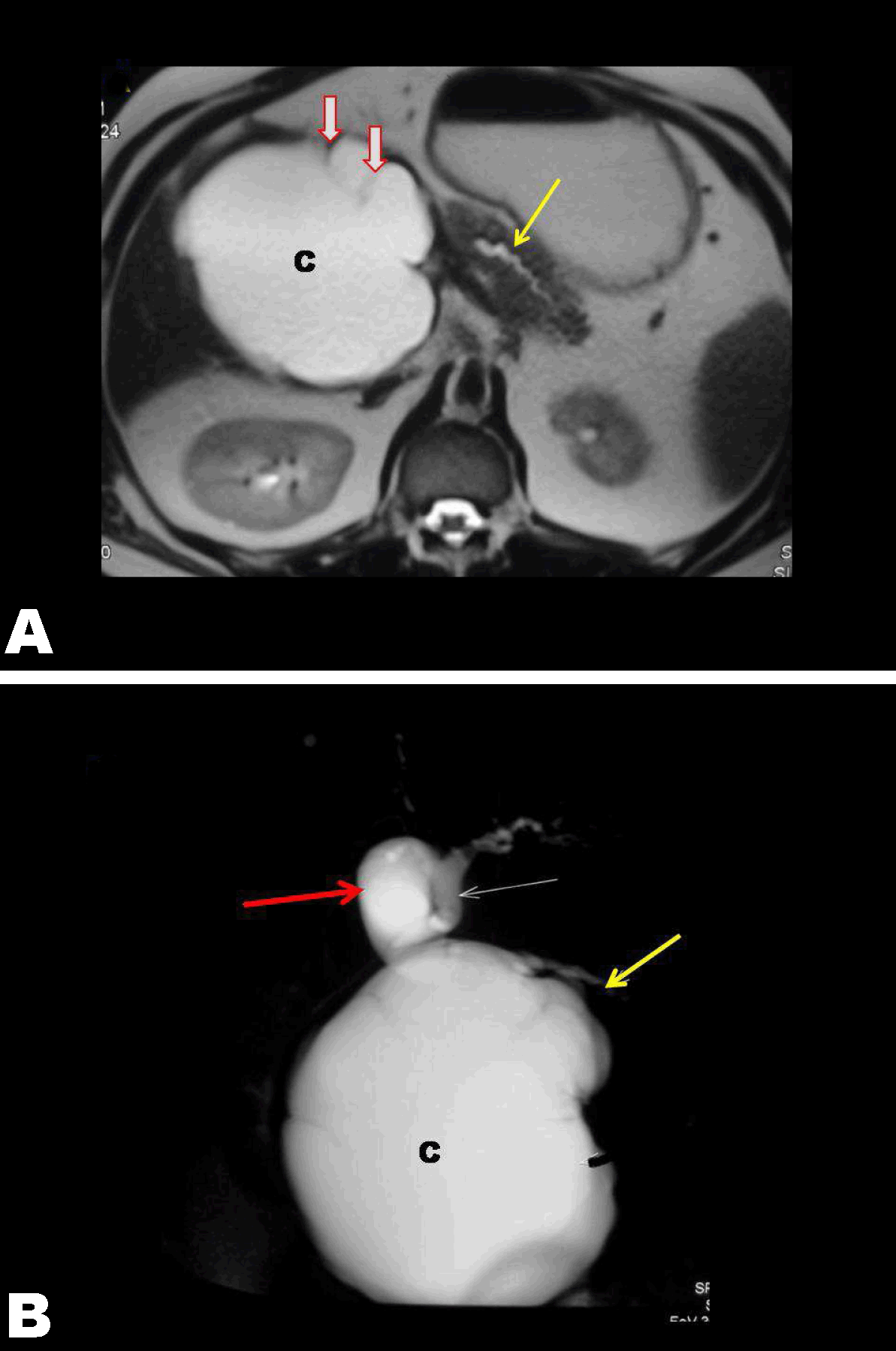
Benign serous cystic tumors of the pancreas are rare and include microcystic serous adenoma, serous oligocystic adenoma (SOA), ill-demarcated adenoma, and macrocystic serous cystadenoma. Microcystic serous adenoma usually present are either unilocular cyst or single lesion containing fewer cysts of more than 2 cm in diameter. It is a rare tumor which usually varies from 2–10 cm in size and at times difficult to differentiate from mucinous cyst. With firm diagnosis small asymptomatic SOAs could be managed without surgery. We describe here a case of middle aged male with a giant serous oligocystic adenoma of 15 cm size arising from head of pancreas producing pressure symptoms. Endoscopic ultrasound and cyst fluid tumor markers were suggestive of serous cystadenoma, computed tomography (CT) and magnetic resonance cholangiopancreatography (MRCP) scan were indicative of mucinous adenoma showing unilocular cyst with dilated common bile duct (CBD), main pancreatic duct (MPD) and communication of cyst with main pancreatic duct. A pancreaticoduodenectomy was done. Histopathology reported the lesion as serous oligocystic adenoma. We are presenting this case due to unusual features, a large unilocular cyst of more than 15 cm in size presented with waxing/waning of surgical obstructive jaundice and on MRCP there was a communication of cyst with MPD with cyst wall thickness of 1 cm (approx.).
| |
|
Keywords:
Common bile duct (CBD), Giant serous oligocystic adenoma, Jaundice, Magnetic resonance cholangiopancreatography (MRCP), Main pancreatic duct (MPD), Ttreatment
| |
|
Introduction
|
|
Cystic neoplasm of pancreas is relatively a common entity and is second only to adenocarcinoma of pancreas. The major histological subtypes are serous cystic neoplasm (SCN), intraductal papillary mucinous neoplasm (IPMNs) and mucinous cystic neoplasm (MCNs) [1]. Rare entities include solid pseudopapillary neoplasm, cystic pancreatic endocrine neoplasm, cystic ductal adenocarcinoma and acinar cell cystadenoma. All cystic neoplasm are considered malignant or premalignant except SCNs which are almost invariably benign [2]. Preoperative diagnosis of the cyst type is necessary to determine the line of treatment. Serous cystic tumors of the pancreas could be microcystic serous adenoma and macrocystic or oligocystic serous cystadenoma. Lewandrowski first described the macrocystic or oligocystic variants of serous cystadenoma which by definition consist of unilocular cyst or a single lesion containing <6 individual cysts, each of more than 2 cm in diameter [3] [4]. The more frequent microcystic variants contains at least six cysts each measuring less than 2 cm in diameter with sponge like honeycomb appearance or central scar or both. Surgical treatment should not be considered unless tumor is symptomatic or the benefit of the operation outweighs risk because of the invariably benign nature of serous oligocystic adenomas [5] . But the establishment of diagnosis of serous oligocystic adenomas (SOAs) is sometimes difficult despite the availability of newer diagnostic methods. Here presenting a case of symptomatic giant cystic neoplasm of pancreatic head with communication to main pancreatic duct which has been operated with a suspected diagnosis of mucinous cyst adenoma, but histopathology reported it as a serous oligocystic adenoma. |
|
Case Report
|
|
A 41-year-old male patient with borderline hypertension, presented to us with complaints of jaundice and postprandial vomiting started one and a half months before without any fever or alteration of bowel, bladder habit. But he noticed a spontaneous partial relief of his symptoms for 10–15 days before he presented to us. Though he has some loss of appetite and weight, but his performance status was otherwise good. At the time of admission patient was icteric with serum bilirubin of 3.5 mg/dL, alkaline phosphate 1414 U/l and GGTP 474 U/l. Physical examination revealed a large firm mass present in upper abdomen extending from right hypochondrium, epigastrium to right lumber and umbilical region. It was non-tender, partially fixed, and dull on percussion without any abnormal pulsation. Contrast computed tomography (CT) scan revealed a well-defined unilocular cyst measuring 15.2x12.1x11.6 cm arising from the head of pancreas pressing over the duodenum and common bile duct (CBD) with dilatation of main pancreatic duct (MPD) (Figure 1). Magnetic resonance cholangiopancreatography (MRCP) revealed dilated CBD and MPD with communication between the cyst and MPD (Figure 2). Endoscopic ultrasound showed unilocular cyst without further specification. Endoscopic ultrasound guided fine-needle aspiration cytology (FNAC)was done for fluid analyses, biochemistry and cytology. Cytology of cyst fluid did not show any malignant cell, cyst fluid CEA was 1.4 ng/mL. Fluid amylase (60 IU/l) and CA19–9 (14.71 U/mL) were within normal limits. In view of obstructive symptoms due to giant size of the lesion pancreaticoduodenectomy was planned. On exploration a huge unilocular cyst measuring 15 cm in greatest dimension was found, displacing the duodenum and pylorus, superior mesenteric vessels and portal vein. Cyst was densely adhered to anterior surface of right kidney, inferior vena cava (IVC) and portal vein. Pancreaticoduodenectomy was performed with Roux-en-Y reconstruction. Postoperative recovery was uneventful and the patient was discharged on sixth postoperative day. Biopsy revealed a solitary cyst filled with hemorrhagic fluid with maximum wall thickness of 1 cm. Microscopic examination showed a cuboidal epithelial lining of cyst wall with focal papillary formation and multi-layering. Cells showed moderate clear cytoplasm and uniform round nuclei without any pleomorphism or mitosis. Cyst wall showed dense fibrosis and patchy mild chronic inflammatory cell infiltrate. Final histopathological diagnosis was serous oligocystic adenoma head of pancreas. |
|
|
|
|
|
Discussion
|
|
Since the first description of serous and mucinous cystadenoma by Compagno and Oertel, many tried to characterize these variants on radiological, pathological and immunohistochemical basis [5] [6]. But many a times diagnosis remains elusive even with advanced measures until histopathology, as in the present case. Serous oligocystic adenoma is a rare entity and comprise 10–30% of serous cyst adenomas [7]. Half of these cases are asymptomatic and diagnosed incidentally. Though microcystic variant may show radiographically visible multiple cysts with or without central scarring, SOAs have few characteristic features. However, distinction is crucial as small asymptomatic SOAs can be managed conservatively. Typical SOAs on imaging appears as a small unilocular or bilocular cyst with a thin wall (2 mm) which lacks mural nodule or calcification[8]. SOAs can be mistaken for mucinous cystic neoplasm, pseudocyst or intraductal papillary mucinous tumor because of relatively large cystic spaces [9] . Giant serous cystadenoma refer to a cystic pancreatic tumor with a diameter of 10 cm or more, which is very rare in comparison to mean tumor diameter of 4–5 cm [10]. They may produce symptom due to pressure affect to surrounding structures. Communication to main pancreatic duct (MPD) is one of the characteristic features of IPMNs and rarely seen in case of MCN and SCN. But it is a very unusual in case of serous cystadenoma and has been reported only in 0.6% cases in endoscopic retrograde cholangiopancrteatography (ERCP) in a series of 144 cases [11]. Waxing and Waning of jaundice may be because of decompression of cyst in MPD. The CT and MRI features of serous oligocystic tumors are documented and diagnosis of cystic neoplasm in most of cases are done on the basis of imaging. Kim et al. [12] and Cohen-Scali et al. [13] described the characteristics CT findings which could differentiate SOAs and MCNs, namely location at head, a lobulated contour and absence of wall enhancement. Some authors regarded MRI as a better technique as it can demonstrate septa within a lesion with greater accuracy and could better evaluate the tissue characteristic like mucinous and serous fluid, solid component and other aspects [10] [11] [14] [15]. Several authors regarded cyst wall thickness as an important differentiating characteristic of serous and MCNs and observed that SOAs have very thin cyst wall (2–4 mm) as compared to MCNs or pseudocyst [8] [11]. In our case, cyst wall was thickened (approx. 10 mm) with intense fibrotic reaction which is unusual of SOAs. Though transabdominal ultrasound could be of some use in large cyst to delineate multicystic characteristic or mural nodules, but most of the time it is of minimum use either due to smaller cyst size or due to deeper location and overlying bowel loops. Rather endoscopic ultrasound is considered as an ideal investigation as it could provide high resolution morphologic imaging and guide for FNAC [9]. ERCP though not required in every case, but may be helpful to differentiate IPMN which demonstrate patulous ampulla pouring out mucin with diffusely dilated pancreatic ducts. A study revealed cyst fluid carcinoembryonic antigen (CEA) of more than 192 ng/mL had sensitivity, specificity and diagnostic accuracy of 73%, 84% and 79%, respectively for mucinous cyst [16]. A value less than 5 ng/mL have been described as highly specific for non-mucinous cyst [16]. In addition, cyst fluid mucin and cytology may provide valuable information to distinguish serous from mucinous cyst. On histopathological examination SOAs appear grossly as a cystic mass of 4–10 cm, usually unilocular, with cut surface showing one or few macroscopically visible cysts of variable sizes usually more than 2 cm, filled with watery or brownish fluid. The irregularly arranged cysts are separated by broad septa of fibrous stroma that lacks a central stellate scar. Microscopically, serous oligocystic adenoma shows the cystic spaces lined by single layer of cuboidal flattened epithelial cells with clear cytoplasm and rarely eosinophilic. The nuclei are centrally located, round to oval in shape, uniform, and have inconspicuous nucleoli .The cells contain abundant intracytoplasmic glycogen which can be demonstrated by periodic acid Schiff stain without diastase digestion. The stromal frame work is well developed and often hyalinized [7] [17]. Treatment is dependent on the symptoms, results of radiologic and cyst fluid analysis. Grossly, surgery is advisable in suspected MCNs, IPMNs, cyst with mass, hemorrhage or mural nodule, duct obstruction or cyst rim calcification [18]. Though asymptomatic serous cystadenoma with classic features can safely be followed, but some authors nevertheless advised surgery for a serous cyst adenoma more than 4 cm diameter because of higher median growth rate [19]. In asymptomatic lesion, diagnosis with certainty is of utmost importance and role of complex diagnostic procedures like endoscopic ultrasound and fine-needle aspiration in this kind of situations is worth doing to defer a major pancreatic surgery. However, situation where scenario remains cloudy despite of all measures, exploration is indicated even if serous cyst adenoma is discovered [20]. |
|
Conclusion
|
|
Serous oligocystic adenomas are rare variant of cystic serous neoplasm of pancreas which, though itself is a low risk tumor, but at times has many overlapping features of high risk minimal change nephrotic syndrome (MCNs) or intraductal papillary mucinous neoplasms (IPMNs) as seen in the presenting case. Though surgery becomes unavoidable in certain situation due to the size of the tumor or symptoms caused by it, firm preoperative diagnosis nevertheless helps to decide the extent of surgery more confidently. Careful approach to patient with diligent use of investigation could lessen the confusion and apprehension among patients as well as in surgeon. |
|
References
|
|


|
[HTML Abstract]
[PDF Full Text]
|
|
Author Contributions
Ruquaya Mir – Substantial contributions to conception and design, Acquisition of data, Analysis and interpretation of data, Drafting the article, Revising it critically for important intellectual content, Final approval of the version to be published Vikram Pratap Singh – Acquisition of data, Drafting the article, Revising it critically for important intellectual content, Final approval of the version to be published |
|
Guarantor of submission
The corresponding author is the guarantor of submission. |
|
Source of support
None |
|
Conflict of interest
Authors declare no conflict of interest. |
|
Copyright
© 2014 Ruquaya Mir et al. This article is distributed under the terms of Creative Commons Attribution License which permits unrestricted use, distribution and reproduction in any medium provided the original author(s) and original publisher are properly credited. Please see the copyright policy on the journal website for more information. |
|
|
|
About The Authors
| |||
| |||
| |||